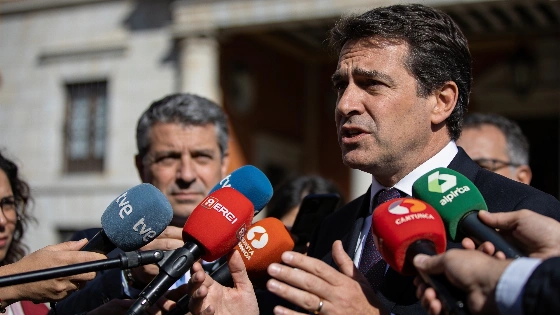
Emiliano García-Page has sharply escalated his criticism of Pedro Sánchez, accusing the prime minister of bowing to the demands of Junts and EH Bildu. The rift exposes deep divisions within the PSOE ahead of key elections.
Emiliano García-Page has launched his strongest criticism yet at Pedro Sánchez, accusing the prime minister of governing at the mercy of what he calls Spain's most uncompromising minorities—specifically Junts and EH Bildu. This public clash highlights the growing rift within the PSOE, as García-Page openly questions the legitimacy of Sánchez’s alliances with separatist parties.
The latest escalation followed a televised interview on Mañaneros 360º, where Sánchez dismissed García-Page’s objections as "minority opinions" within the party. Sánchez grouped García-Page with former president Felipe González, suggesting their dissent was routine and unlikely to influence government policy. According to RTVE, Sánchez said on September 9, 2026, that disagreements with García-Page and González are "normal" and that it would be surprising if Page actually supported the government’s position.
On September 4, García-Page called the government’s new regional financing proposal the "most unfair and unequal" model in Spanish democratic history, directly accusing the cabinet of accepting ERC and Junts’ conditions.
García-Page, president of Castilla-La Mancha, responded by accusing Sánchez of double standards. He argued that while Sánchez downplays internal criticism, he has become reliant on the very separatist parties he claims to keep at arm’s length. García-Page pointed to Sánchez’s policy reversals, especially on the amnesty law, which Sánchez had ruled out before the 2023 general election but later accepted under pressure from Carles Puigdemont and Junts to secure his investiture. Reports from ABC and El Constitucional note that García-Page has repeatedly warned that the government’s dependence on ERC and Junts for parliamentary support is reshaping national policy and straining party unity.
“I cannot keep up with so many changes of opinion,” García-Page said at a public event in Guadalajara, expressing frustration with what he sees as the government’s shifting positions. He acknowledged agreeing with many government policies, but said the frequent reversals have eroded trust both inside and outside the party. This view is shared by other PSOE veterans and regional leaders.
The split within the PSOE goes beyond García-Page. Figures like Felipe González and Palencia’s mayor Miriam Andrés have also raised concerns, though few do so as openly. At the last federal committee meeting in June, García-Page called for early elections, warning that Sánchez’s deals with separatists could hurt regional and local candidates. He also criticized the party’s reluctance to address corruption scandals involving figures such as José Luis Ábalos and Koldo García, as well as ongoing judicial cases involving other party members.
Recent reports highlight that ERC has become central to negotiations over regional financing, while Junts continues to exert pressure during the parliamentary process. The Ministry of Finance’s proposal was approved with the support of the central administration, Catalonia, and the Canary Islands, but officials in Castilla-La Mancha warn that Junts may still demand changes as the bill moves through parliament.
Despite these warnings, Sánchez has not changed course. He rejected calls for early elections, pointing out that those demanding a vote now are the same who opposed PSOE’s government formation in 2016, the no-confidence motion in 2018, and coalition deals in 2023. His strategy remains focused on keeping a parliamentary majority, even if it means relying on parties that have challenged Spanish unity. According to EFE and RTVE, this dependence on smaller parties like Junts and Bildu has become a sensitive issue, especially as these groups push for more regional powers and have recently clashed with Sánchez over issues such as Ceuta and migration policy.
García-Page’s latest remarks come as the PSOE faces a crucial year, with general elections approaching and uncertainty over whether Sánchez will call them before the next round of municipal and regional votes. Tensions have grown after incidents like the Catalan far right’s recent rhetoric against Spain, which García-Page cited as a warning about the risks of making concessions to separatists.
These disputes are not happening in isolation. The PSOE’s handling of issues from the Ceuta crisis to corruption allegations has drawn criticism from both inside and outside the party. As noted in a recent report, the government’s response to regional crises has already faced scrutiny from influential voices beyond its own ranks.
The result is a PSOE leadership increasingly at odds with some of its regional power bases, with García-Page as the most outspoken critic of Sánchez’s current approach. The prime minister’s reliance on separatist support may help him win votes in parliament, but it is deepening internal divisions and raising questions about the party’s long-term unity. A sitting regional president publicly accusing the national leader of capitulation signals that the PSOE’s internal tensions are reaching a critical point. If Sánchez continues to dismiss dissent as marginal, he risks underestimating the level of discontent within his own party—and the consequences could go well beyond the next election.