Emiliano García-Page calls the Ceuta border crisis a major management failure and urges the central government to take responsibility. He warns that mishandling the situation could strengthen the far right, as scrutiny over the government's response grows.
Emiliano García-Page has sharply criticized the government’s handling of the Ceuta border crisis, calling it one of the worst management failures in recent years. The Castilla-La Mancha president warned that if Madrid does not change course, the fallout could give the far right a significant boost.
In an interview with Onda Cero, García-Page compared the current response to Ceuta with past political mistakes, referencing the 11-M narrative as an example of how denial and deflection can erode public trust. He argued that refusing to take responsibility only deepens mistrust and gives political opponents an opening.
According to Reuters, Spanish intelligence (CNI) warned both Moroccan and Spanish authorities on July 29 about social media calls for mass crossings into Ceuta, estimating the audience of these groups at around 180,000 people.
The controversy grew after the government declassified CNI reports showing that authorities had been warned about the risk of mass migrant entries into Ceuta. García-Page questioned whether these warnings were acted on or ignored, and pressed for clarity on what steps, if any, were taken before the crisis. BBC and other European media reported that the CNI sent alerts not only to the central government, but also to the Ceuta government delegation and the Guardia Civil, underlining the seriousness of the threat.
He criticized what he called a pattern of leadership that avoids blame, only to see accountability fall everywhere except where it belongs. García-Page said this approach undermines public confidence and makes it difficult to find real solutions. Official sources in Madrid, cited by Spanish media, say that while the CNI did issue warnings, these were sent through informal channels and not as a formal alert. The government maintains that the scale of the crisis could not have been predicted.
His comments come as divisions within the government over the Ceuta crisis have become more visible. As previously reported, the release of CNI documents has sparked debate within the PSOE and exposed disagreements between ministries over who should take responsibility for the border breakdown. Euronews also confirmed that the National Center for Migration and Borders (CENIF) issued a warning on July 29 about the high risk of mass entries, including attempts to swim across the border.
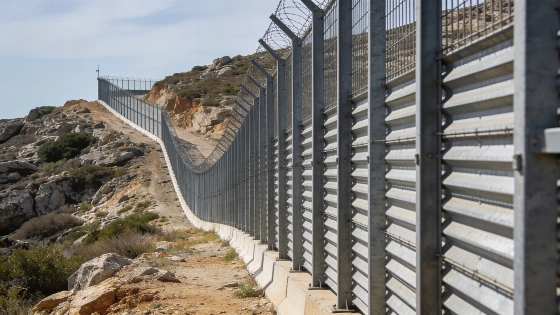
Official statistics show that from January 1 to August 31, 2026, 4,076 people entered Ceuta by land—a 102.3% increase compared to the same period in 2025. This sustained pressure on the border continued even after the previous year's crisis.
Spanish press based on official data
García-Page pointed to international examples, recalling how former German chancellor Gerhard Schröder personally led flood recovery efforts and managed to turn his political fortunes around by taking direct action. In contrast, he said, the Spanish government’s response to Ceuta has lacked urgency and ownership.
Despite his criticism, García-Page defended the CNI, calling it one of the world’s top intelligence services, and praised the work of the Guardia Civil and Policía Nacional. He acknowledged that mistakes can happen but insisted that these institutions should not be scapegoated.
On the diplomatic side, García-Page noted that Pedro Sánchez initially described the Ceuta incident as a violation of Spain’s territorial integrity, even though Ceuta’s only land border is with Morocco. He suggested that this framing may have complicated relations and muddled the government’s message.
The Ceuta crisis has become a focal point for debates about Spain’s border security, migration policy, and political accountability. The government’s reluctance to accept responsibility, combined with the public release of intelligence warnings, has created an opening for opposition parties and the far right. García-Page’s warning is clear: unless Madrid faces its own failures directly, it risks repeating past mistakes and losing ground to those who benefit from political paralysis.