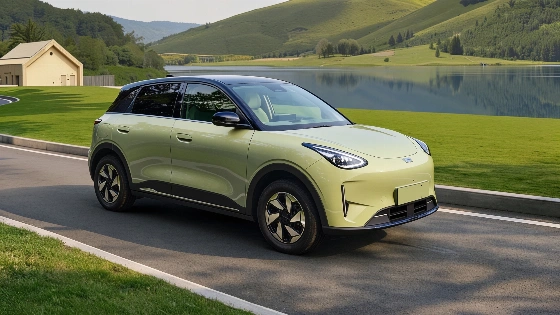
Geely has jolted Spain’s electric car market, launching the E2 at a price that puts pressure on European rivals. Already a strong seller in China, the E2 has arrived in Spain with a starting price below 15,000 euros after incentives. That resets expectations for what a city EV can cost.
Skoda’s answer is the Epiq, a crossover built in Pamplona and pitched as the more powerful, locally made option. But its initial version costs more than 25,000 euros even after discounts, leaving it at a clear disadvantage on price. Skoda is leading with the Epiq 55, which offers 211 CV and a 440-kilometer range. The company says cheaper versions are coming soon.
Geely officially launched the E2 in Spain on September 9, 2026, its third model introduction in the country in just half a year.
Source: Xinhua
Price is only part of the story. The Geely E2 is 4.13 meters long and seats four adults comfortably, with 445 liters of cargo space split between the front and rear. It uses rear-wheel lead and Geely’s GEA platform, and comes with either 82 CV and a 35 kWh battery or 116 CV and a 47 kWh battery. The larger battery is rated for up to 345 kilometers of combined range and nearly 500 kilometers in city driving. Independent Spanish automotive publications report that these figures match official WLTP and urban-cycle tests, giving buyers a reliable basis for comparison.
The E2’s batteries support fast charging at up to 60 kW or 80 kW DC, reaching 80% in just over 20 minutes. All versions include V2L, so the car can power external devices, a feature usually found in more expensive models. Equipment levels run from PRO to MAX, with the entry version paired with the smaller battery and higher trims unlocking the full range. Geely’s official Spanish website calls the E2 the "best-selling car in its category worldwide" and highlights its design and tech features.
At 4.17 meters, Skoda’s Epiq is similar in size but offers more cargo space: 475 liters, including a 25-liter underfloor compartment. Built on the MEB+ platform shared with Volkswagen and Cupra, the Epiq lineup will soon grow beyond the flagship Epiq 55. The current model’s 51.7 kWh NCM battery supports charging at up to 133 kW, with a claimed charge time of 24 minutes from 10% to 80%. Lower-powered Epiq 40 and Epiq 35 versions with LFP batteries are on the way, and are expected to bring the price closer to Geely’s.
Independent Spanish sources say the Geely E2's promotional price starts at 13,990 euros with financing and government incentives. The Skoda Epiq's most affordable version currently available in Spain starts at 22,800 euros under similar conditions. Several leading automotive outlets report that this price gap has become a focus of local market discussion.
Source: Europapress
Skoda stands out for its advanced charging features: every Epiq supports V2L, V2H, and V2G, allowing it to supply energy to a home or the grid. Its interior is more refined than the E2’s, with more optional tech and travel packages. For buyers seeking European build quality and a bigger boot, the Epiq has appeal, if they’re willing to wait for the cheaper models.
The timing isn’t accidental. 2026 is shaping up as the year small, affordable electric cars gain ground in Spain, as Chinese imports rise and European factories respond. As reported earlier, Chinese brands like BYD are also adding pressure, pushing established automakers to rethink pricing and technology.
For now, the Geely E2’s low price and practical range make it Spain’s most accessible urban EV. Skoda’s Epiq, though more expensive at launch, promises a broader lineup and more flexibility once entry-level models arrive. A direct comparison will come when both brands compete at similar prices. Until then, Geely’s move shows how much room remains for change in Europe’s electric city car market, and suggests overpriced, under-equipped urban EVs may soon be a thing of the past.