A German-led consortium will invest over €100 million to open the first commercial plant for wooden wind turbine blades in Navarra. Backed by EU Innovation Fund support, the project targets 450 jobs and a new approach to sustainable energy manufacturing.
Navarra is set to become the site of a global first: a commercial factory dedicated to producing wind turbine blades from laminated veneer lumber (LVL) instead of traditional composites. The VB1F project, led by Voodin Blade Technology alongside Anker-Tec, VMG Wood Invest, and VMG Technics, has secured €48.18 million from the EU Innovation Fund and plans to mobilize more than €100 million in total investment.
According to project documents, construction is scheduled to begin on April 1, 2026, with operations expected to start by the end of 2030. Industrial-scale production is planned for 2031, with the facility aiming to manufacture up to 160 sets of blades per year, each ranging from 20 to 90 meters in length. The initiative is expected to create around 450 operational jobs, primarily for skilled professionals in production management, operations, and maintenance.
Innovative Materials and Methods
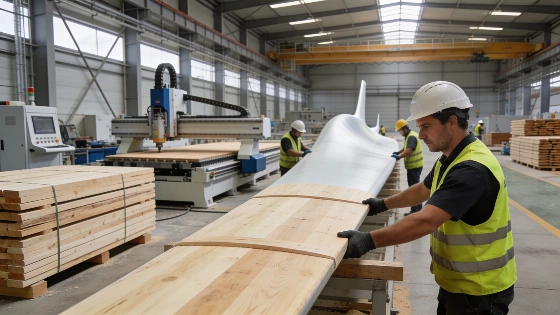
Unlike conventional blades made from fiberglass or carbon fiber, the new blades will use LVL—a high-performance engineered wood made from thin layers of Nordic spruce bonded with structural adhesives. This material offers the rigidity and fatigue resistance needed for wind turbine applications, while also enabling a shift in manufacturing methods. Instead of custom molds for each blade model, the plant will use five-axis CNC machines to shape components directly from digital files. This approach, according to the European Commission, could cut capital investment by 54% compared to traditional processes, while Voodin estimates a 20% reduction in blade costs and a 78% drop in CO₂ emissions during manufacturing.
Environmental Impact and Recycling
The environmental benefits are central to the project. Over the first decade, the plant's output could generate nearly 13.5 million megawatt-hours of electricity, while avoiding more than 2.4 million tonnes of CO₂ equivalent compared to standard reference scenarios. The use of wood not only stores biogenic carbon but also addresses a major challenge in wind energy: end-of-life recycling. Conventional blades, made from composite materials, are notoriously difficult and expensive to recycle, with most ending up in landfills. Voodin claims its wooden blades can be recycled at the end of their service life, which is projected to exceed 25 years. The European project summary suggests the process could reduce certain environmental impacts—such as fossil resource depletion, human toxicity, and water use—by up to 90% compared to fiberglass blades.
Navarra's Strategic Role
While the exact location within Navarra has not been disclosed, the region was chosen for its established wind energy ecosystem and strong institutional support. The announcement, highlighted by Invest in Navarra, adds to a series of recent industrial investments in the area. Although another major plant in Navarra is expected to create over 300 jobs, the two projects operate in different sectors.
Job Creation and Next Steps
The projected 450 jobs are tied to the operational phase of the factory. As of now, these are not open vacancies, and no details have been released regarding recruitment timelines, required qualifications, or which companies will handle hiring. Those interested in future opportunities are advised to focus on training in renewable energy and industrial maintenance, but will need to wait for official announcements from the consortium.
For now, the VB1F project stands as a significant step in the evolution of wind energy manufacturing in Europe, combining industrial innovation with environmental responsibility. If successful, it could set a new standard for sustainable production and recycling in the sector.