Transferring a valuable jewel to a child or relative in Spain is not just a personal gesture—it comes with clear fiscal duties. Whether the piece is a gift or part of an inheritance, Spanish law demands proper declaration and tax compliance, regardless of family ties.
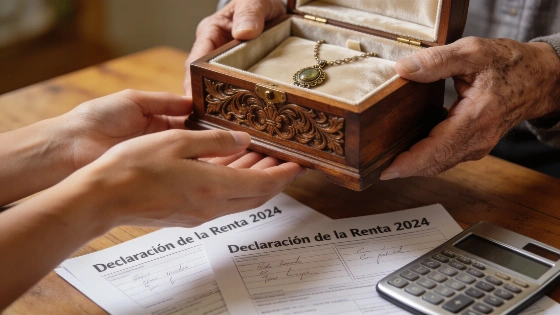
Handing over a piece of jewelry to a loved one may seem like a simple act, but in Spain, it carries legal and tax consequences that many overlook. According to notary María Cristina Clemente, even when a jewel is given directly and without a formal deed, the recipient is required to declare the donation to the tax authorities.
Spanish law treats jewelry as a movable asset, and its transfer—whether as a gift or inheritance—must be properly documented for tax purposes. If the jewel is inherited, it must be included in the deceased's estate inventory, and the beneficiary is liable for inheritance tax based on the net value of the assets received.
Tax on Gifts: No Exceptions for Family
The Spanish Civil Code allows for the donation of movable goods, such as jewelry, either verbally or in writing. If the transfer is verbal, the physical handover must occur immediately. Otherwise, a written document is required, including the recipient's acceptance. However, skipping a notarial deed does not exempt anyone from tax obligations. The recipient, known as the 'donatario', must file and pay the Gift Tax (Impuesto sobre Donaciones), regardless of family relationship or the informality of the exchange.
The value of the jewel must be declared at its market price—the amount it would likely fetch in a transaction between independent parties. Spanish tax authorities reserve the right to review and adjust the declared value if they believe it does not reflect the true worth of the item.
Regional Differences and Documentation
The final tax amount depends on several factors: the jewel's value, the degree of kinship, the recipient's existing assets, and the rules of the relevant autonomous community. Each region in Spain can set its own reductions, rates, deductions, and bonuses, as well as specific documentation requirements. To benefit from any regional tax relief, the paperwork must be thorough and precise.
Even when a public deed is not mandatory, the law requires that the tax declaration be accompanied by a document or statement detailing the transaction. This should clearly identify the jewel, its value, the date of transfer, and the parties involved. Failing to provide adequate documentation can lead to complications or the loss of potential tax benefits.
Inheritance: Including Jewelry in the Estate
When jewelry is passed on after the owner's death, it must be listed among the assets of the estate. The heir is then responsible for paying inheritance tax, calculated on the net value of all inherited goods. Notary María Cristina Clemente advises specifying in the will who should receive each piece of jewelry to minimize family disputes. However, the testator's wishes must still respect the legal shares reserved for forced heirs under Spanish civil law.
Clemente also cautions against drafting a handwritten (holographic) will without professional guidance. Vague or imprecise instructions can complicate the distribution of jewelry and potentially infringe on the rights of mandatory heirs.
Recent High-Profile Case Highlights the Issue
The importance of proper valuation and declaration was underscored recently when a court-ordered appraisal valued jewelry found in the office of former president José Luis Rodríguez Zapatero at approximately €1.3 million. The assessment, conducted by Ansorena jewelers with the Spanish Gemological Institute, brought renewed attention to the fiscal responsibilities tied to valuable personal items.
In summary, gifting or inheriting jewelry in Spain is never just a private matter. The law requires transparency, accurate valuation, and timely tax declarations, regardless of the relationship between giver and recipient. Ignoring these obligations can result in legal and financial complications that far outweigh the sentimental value of the gift.