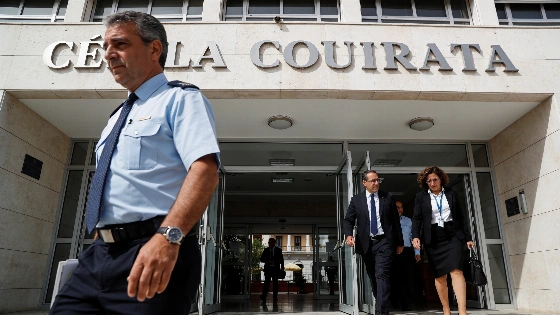
Spain’s Justice Ministry has called on the judiciary to fast-track reinforcements for Ceuta’s courts. The Ministry says funding is ready, but action from the CGPJ is needed. The move follows a sharp rise in migration cases.
The Spanish government has demanded immediate action from the Consejo General del Poder Judicial (CGPJ) to accelerate the reinforcement of Ceuta’s judicial system. According to a letter sent by Secretary of State for Justice Manuel Olmedo, the Ministry is fully prepared to approve the necessary budget, but is waiting for the CGPJ to submit the formal request and inspection report. This step is seen as critical to address the mounting pressure on Ceuta’s courts following a dramatic increase in migration-related cases.
Ceuta, an autonomous city bordering Morocco, currently operates with 14 judicial bodies, including civil, criminal, administrative, social, juvenile, and penitentiary courts, as well as a branch of the Provincial Court of Cádiz. All these institutions fall under the jurisdiction of the High Court of Justice of Andalusia, Ceuta, and Melilla. The recent influx of around 80,000 migrants at the end of July has placed unprecedented strain on the city’s legal infrastructure, prompting urgent calls for additional resources.
In his communication, Olmedo urged the CGPJ to prioritize reinforcements by assigning magistrates from other courts or sections outside Ceuta’s civil and investigative divisions, and, if necessary, to use substitute judges. He also highlighted that the Ministry has already authorized measures to boost the number of experienced court staff. In the coming days, three clerks, a process manager, and an assistant are expected to join Ceuta’s judicial teams. Additionally, the Ministry has approved expanded duty shifts to help process the growing volume of cases.
The government’s commitment extends beyond judges and clerks. Reinforcements have also been authorized for the prosecution service, with three substitute prosecutors joining the Area Prosecutor’s Office. The Institute of Legal Medicine in Ceuta has received 11 forensic doctors, seven autopsy technicians, and two additional clerical staff. The Ministry has also approved extended working hours for three senior court lawyers, five extra duty immigration lawyers, and enhanced translation and interpretation services.
Olmedo’s letter follows a recent decision by the CGPJ’s Permanent Commission, which agreed to initiate the reinforcement process for Ceuta’s courts, echoing a proposal made by the Ministry three weeks earlier. The urgency of the situation is underscored by the scale of the migration crisis, which has forced the government to coordinate rapid judicial and administrative responses. As noted in a related report on the political fallout from the Ceuta migrant influx, the crisis has already led to heightened scrutiny in Congress and exposed deep divisions among Spain’s political leadership. For further context on the broader impact of the Ceuta crisis, see the analysis of government actions and parliamentary hearings at this recent coverage.
Ceuta’s unique position as a Spanish enclave in North Africa has long made it a focal point for migration and border security challenges. The city’s legal system, while robust, is not designed to handle sudden surges in caseloads of this magnitude. The current push for reinforcements reflects both the immediate operational needs and the broader challenge of maintaining judicial effectiveness in the face of unpredictable migration flows. The Ministry’s readiness to allocate funds and personnel signals a recognition of the stakes involved, not only for Ceuta but for Spain’s broader approach to border management and the rule of law.