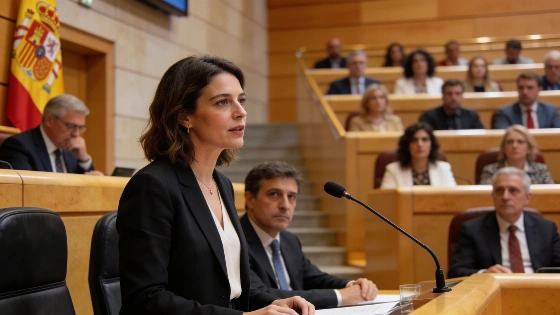
The unresolved migrant influx in Ceuta pushes the government to present its version in Congress. Seven ministers will testify, aiming to clarify facts and counter misinformation. The crisis exposes deep political divisions ahead of the election year.
The Spanish government is set to confront the ongoing Ceuta migrant crisis in Congress this week, with seven ministers scheduled to testify in a coordinated effort to clarify the origins and current status of the mass entry of migrants into the autonomous city. This move comes 26 days after an unprecedented influx of around 80,000 people overwhelmed Ceuta, raising urgent questions about border control, legal procedures, and Spain’s relationship with Morocco.
Ministers will use their appearances to present verified data and address widespread misinformation that has circulated since the incident. The government has yet to settle on a single explanation for the sudden surge, but points to a combination of organized smuggling networks, amplified by social media, and possible involvement from countries beyond Morocco. The idea of returning all migrants to Morocco faces significant legal and political obstacles, as well as reluctance from Rabat to accept them en masse.
Prime Minister Pedro Sánchez has ruled out direct communication with opposition leader Alberto Núñez Feijóo, citing strained relations and the opposition’s immediate politicization of the crisis. The political calendar intensifies the stakes, with the final legislative session before the 2027 elections now dominated by the fallout from Ceuta.
The week’s hearings begin with Defence Minister Margarita Robles, followed by appearances from ministers of Presidency, Health, Interior, Foreign Affairs, Inclusion, and Youth. The government previously declined to send ministers to the Senate, where the PP holds a majority, arguing that Congress is the appropriate forum—a dispute that has already reached the Supreme Court without success for the opposition. This institutional standoff was recently highlighted in coverage of the Senate’s escalating demands for ministerial accountability.
Robles will open the session by detailing the events of July 30, when thousands entered Ceuta in a matter of hours—numbers nearly matching the city’s population. The government aims to clarify how many migrants entered, how many have since left, and how many remain, particularly minors and asylum seekers awaiting possible transfer to the mainland.
Officials acknowledge the complexity of the situation, with no clear trigger identified. Internal speculation includes the role of misleading messages spread via social networks, not only from Morocco but also potentially from Russia. Some ministers see the crisis as part of a broader campaign to undermine Spain’s international standing, especially given Sánchez’s positioning as a progressive leader in Europe.
Despite past incidents where Morocco sent clear diplomatic signals—such as after Spain’s medical assistance to the Polisario Front leader in 2021—current communications between Spanish and Moroccan foreign ministers suggest Rabat is not directly orchestrating the crisis. Daily contacts between José Manuel Albares and Nasser Bourita have reinforced this view, with no explicit demands or threats from Morocco.
The government insists it had no advance warning of the July 30 events. While Ceuta’s president, Juan Jesús Vivas, reported increased crossings in the days prior, officials argue these numbers were typical for summer and did not foreshadow the scale of the surge. The administration now faces the challenge of managing the aftermath, balancing legal requirements for minors and asylum seekers with Morocco’s limited willingness to accept returns.
Political divisions remain stark. Left-wing parties advocate for transferring migrants to the peninsula, while the PP, often allied with Vox in regional governments, opposes such moves. The government accuses the opposition of lacking a constructive approach, while the PP claims the executive is avoiding Senate oversight and manipulating congressional procedures for political gain.
Contextually, Ceuta’s unique status as a Spanish enclave bordering Morocco has long made it a focal point for migration and diplomatic tensions. The city’s population and infrastructure are regularly tested by such crises, and the current situation has reignited debates over Spain’s border management, asylum policy, and the broader implications for EU migration strategy. The outcome of this week’s congressional hearings may shape not only the immediate response but also the political climate leading into the next general election.