The Senate, led by the PP, intensifies its confrontation with the government over ministerial appearances linked to the Ceuta crisis. The dispute highlights deep institutional tensions and questions the Senate's role in Spanish politics.
The Senate has become the focal point of a growing institutional standoff in Spain, as the chamber—now under the control of the Partido Popular (PP)—presses the government for explanations regarding the recent crisis in Ceuta. The refusal of key ministers to appear before the Senate before addressing the Congress has triggered a new phase in the ongoing power struggle between the legislative branches and the executive.
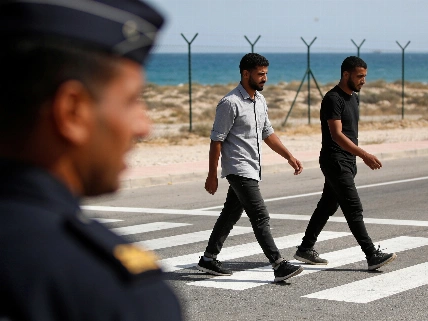
This conflict is not isolated. Over the past three years, the Senate has repeatedly challenged the government and the Congress, leveraging its constitutional authority to scrutinize the executive. The current dispute centers on the government's handling of the sudden arrival of over 80,000 migrants in Ceuta, with the PP demanding urgent accountability from the Ministers of Interior, Defence, and Foreign Affairs. The government, however, insists that ministers will first address the Congress, citing the lower chamber's role in granting confidence to the prime minister.
The Senate's assertiveness is rooted in Spain's 'imperfect bicameralism,' where the Congress holds the final say on legislation and government formation, while the Senate acts as a chamber of territorial representation and second reading. Despite this, the PP has used its Senate majority—secured through a provincial electoral system that favors the party even with a minority of votes—to intensify oversight and launch a series of investigations. Notably, the chamber has initiated seven investigative commissions this term, including the high-profile Koldo case, which has seen over a hundred witnesses and remains active more than two years after its inception.
Legislative productivity in the Senate has also reached record levels, though with limited practical effect. The chamber has submitted 46 legislative proposals to the Congress, but the lower house has stalled them by extending amendment deadlines indefinitely. Meanwhile, the Senate has filed a dozen constitutional challenges against the Congress and the government, further straining institutional relations.
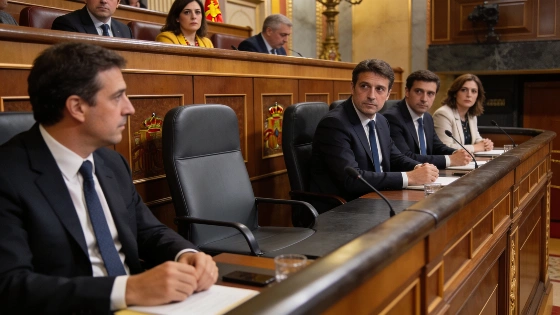
The latest flashpoint came when Interior Minister Fernando Grande-Marlaska declined to attend a Senate commission, leaving his seat empty as PP, Vox, and Junts representatives looked on. The PP has seized on these absences, with Senate President Pedro Rollán accusing the government of defying parliamentary oversight. Marlaska has been summoned again for the following week, raising the prospect of another high-profile no-show.
Legal experts agree that ministers cannot outright refuse to appear before the Senate, though in practice, delays are common and the chamber's only recourse is a lengthy appeal to the Constitutional Court. The government maintains that it will not participate in what it sees as partisan use of the Senate, preferring to address the Congress first. This approach has precedent: during the 2015–2016 institutional deadlock, Mariano Rajoy's caretaker government avoided Congress appearances, only for the Constitutional Court to affirm the Senate's right to demand accountability.
Earlier this year, the Constitutional Court also struck down a Senate rule change by PP and Vox that would have allowed the chamber to delay urgent legislation sent from the Congress, reaffirming the lower house's legislative primacy. The ongoing dispute over ministerial appearances is expected to result in yet another constitutional challenge.
As the Senate continues to push its institutional boundaries, the broader debate over its role and effectiveness resurfaces. The chamber's territorial representation, enshrined in the Constitution, has long been criticized as ambiguous and in need of reform. Despite numerous proposals, meaningful change remains elusive, and the Senate's current activism underscores the unresolved tensions within Spain's parliamentary system.
For additional context on the ongoing standoff between the Senate and the government over the Ceuta crisis, see the recent developments where ministers declined Senate summons, as detailed in this related report.
Spain's Senate, housed in a historic Madrid palace, has often faced questions about its relevance. Yet, as recent events show, its capacity to disrupt and challenge the executive remains significant—especially when controlled by an opposition party. The current situation highlights the fragility of Spain's institutional balance and the potential for further legal and political battles as both chambers assert their authority.
In the context of Spanish politics, the Senate's actions may have broader implications for the country's legislative process and the relationship between national and regional interests. The ongoing disputes could prompt renewed calls for reform, but for now, the chamber stands as a powerful, if controversial, force in the nation's governance.