Spain's government is expediting efforts to house all irregular migrants in Ceuta and speed up deportations. New shelters and digital procedures aim to ease tensions after recent unrest. Security forces remain on high alert.
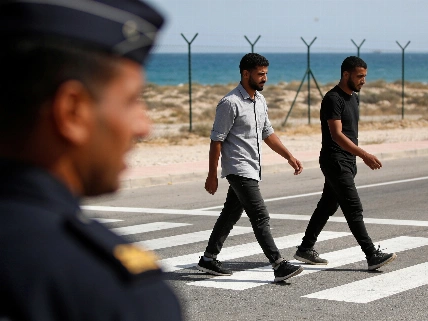
Spain's government has launched an urgent operation in Ceuta to relocate all irregular migrants from public spaces within two weeks, intensifying both technical and political resources after a surge in street violence and mounting local tensions. The move comes after a night marked by clashes between residents and groups of migrants, prompting authorities to accelerate the creation of temporary accommodation and streamline deportation processes.
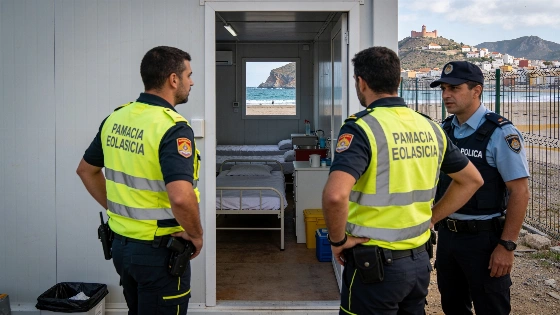
Officials have finalized a list of available sites to house migrants and are fast-tracking construction to ensure no one remains sleeping on the streets or beaches. According to government sources, the visible presence of migrants outdoors has been a key factor fueling unrest in the city. The new plan includes the rapid adaptation of facilities with essential amenities—beds, showers, and dining areas—located as far from residential neighborhoods as possible to minimize friction, even though this complicates logistics.
Deportation procedures, especially for Moroccan adults with little chance of asylum, are also being accelerated. Additional specialized police have been deployed to Ceuta, and legal interviews required for expulsions can now be conducted online, involving officers and translators outside the city. This digital approach is designed to overcome the logistical challenges of sending more personnel to an already crowded area filled with security and humanitarian staff.
Ten days after receiving an offer of European support, the government has formally requested assistance from the EU's Frontex agency to help with the classification and processing of migrants. This includes the use of foreign police and interpreters working remotely to speed up expulsions. The government maintains that the most critical step remains providing secure, equipped spaces for migrants, as legal procedures require protected IT systems not available in makeshift outdoor settings.
To coordinate the response, Secretary of State for the Interior Aina Calvo has relocated to Ceuta to oversee operations. A dedicated center for asylum and deportation processing is expected to open within days, offering temporary beds for migrants who need to stay up to 72 hours while their cases are handled.
The first meeting of the unified crisis command, led by Pedro Sánchez and attended by Ceuta's president Juan Jesús Vivas, made clear that further debate over shelter locations is over. After weeks of local resistance and shifting proposals, final sites were agreed upon, prioritizing speed of adaptation over long-term construction. Dozens of Tragsa workers are now racing to complete the necessary upgrades.
Authorities hope that once migrants are housed and fed in these centers, social tensions will ease. While migrants retain the right to leave the facilities, the expectation is that regular meals and overnight stays will reduce the need for them to seek food or shelter elsewhere, making the work of police and aid organizations more manageable. The government is also determined to prevent further scenes of residents blocking Red Cross trucks or confronting volunteers, incidents that have drawn widespread condemnation and prompted a joint statement from all Ceuta political parties rejecting violence.
Security has been reinforced with additional police and military presence, and more riot control units have been sent to the city. The government is counting on President Vivas to use his influence to discourage residents from obstructing humanitarian aid, while authorities remain vigilant to prevent a repeat of recent confrontations. As previously reported, the crisis has already triggered political fallout, with opposition parties demanding early elections and criticizing the government's handling of the situation. For more on the political response and rising tensions, see the detailed coverage in this recent analysis of the Ceuta crisis.
During Friday's press briefings, ministers José Manuel Albares, Fernando Grande-Marlaska, and Elma Saiz reiterated that Morocco is not seen as the main driver behind the recent influx of 72,000 migrants, citing ongoing cooperation with Rabat and the rapid return of most arrivals in the first hours. While officials defended their crisis management, the government's recent escalation of resources and the establishment of a unified command reflect an acknowledgment that the initial response was insufficient and that the situation remains highly sensitive as Spain enters a decisive political season.
Ceuta, a Spanish enclave on the North African coast, has long been a focal point for migration from Morocco and sub-Saharan Africa. The city's unique geography and border infrastructure make it a frequent entry point for those seeking to reach Europe. The current crisis has highlighted the challenges of balancing humanitarian obligations, local security, and political pressures. The rapid deployment of resources and the involvement of EU agencies underscore the complexity of managing migration flows at Spain's external borders. As the government pushes to resolve the immediate crisis, the outcome in Ceuta may set a precedent for future responses to similar situations elsewhere in the country.