Spain’s government has declassified 40 secret documents after the Ceuta border crisis. Officials aim to disprove claims that authorities ignored warnings of a mass crossing. The move exposes deep rifts within the cabinet and raises new questions about intelligence failures.
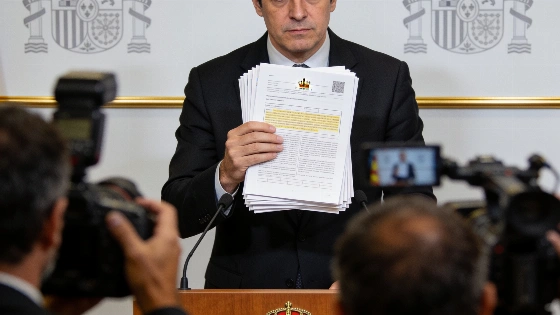
Spain’s government has released 40 previously confidential documents in an effort to push back against claims that it ignored warnings before the mass entry of migrants into Ceuta. The files, which will be published on La Moncloa’s official website, are meant to directly address accusations from the opposition that authorities failed to act on intelligence ahead of the July incident.
Government spokesperson Elma Saiz announced the move after weeks of political fallout following the arrival of more than 70,000 migrants in Ceuta on July 30 and 31. The documents cover events up to August 1, just after the border crisis that left Spanish institutions searching for answers. According to major Spanish media, the government says the documents will be published only after sensitive information is removed, citing the need to balance transparency with national security.
The Spanish government officially stated that no formal warnings about a mass crossing of tens of thousands were received; only reports of increased attempts in July were noted.
The controversy has exposed a sharp split within the cabinet. The opposition Partido Popular claims that the Ministry of the Interior, led by Fernando Grande-Marlaska, ignored explicit warnings from the CNI and other agencies. These claims gained traction after Defence Minister Margarita Robles suggested that intelligence services had flagged the risk of a mass crossing, fueling tensions inside the government and giving critics more leverage. Infobae and Democrata have reported that this internal dispute is now a central issue in the ongoing political debate.
Prime Minister Pedro Sánchez ordered the declassification to support his statement in Congress: while there were reports of more Moroccans swimming into Ceuta throughout July, no agency issued a formal alert predicting a mass crossing of tens of thousands. The government maintains that the intelligence available did not anticipate the scale of the event, and that neither the CNI nor any other body foresaw such a large group still on Moroccan soil. Elma Saiz has repeated that the government has "nothing to hide" and is prepared to release more documents if needed.
Even with the release, the government has not detailed the full contents of the documents. Reports from the CNI that might address Morocco’s possible role in the crossing remain classified. According to La Moncloa, these intelligence assessments are inconclusive and do not provide the evidence needed for Spain to formally accuse Morocco, a step that would have unpredictable diplomatic consequences.
The declassification of the Ceuta crisis documents has become a central issue in the public dispute between Spain's ruling PSOE and the opposition PP, with both sides debating who knew what and when. Judicial authorities, including the National Court, are also investigating the episode as a potential crime against state security, adding further political sensitivity to the release.
The timing of the declassification follows growing pressure from political rivals and from within the cabinet, as the fallout from the Ceuta crisis continues. The government’s move is an attempt to regain control of the story and defend itself against accusations of negligence. As reported earlier, the scale of the Ceuta influx has already revealed major gaps in Spain’s migration data and crisis response systems.
The crisis has exposed the limits of Spain’s intelligence and border management. The Supreme Court’s ruling against hot returns for swimmers, the lack of a physical barrier, and the absence of early warnings all contributed to the situation. By releasing some documents but keeping others classified, the government is trying to defend itself while avoiding a direct confrontation with Morocco. In the end, the episode is less about settling the debate and more about limiting the political and diplomatic fallout from a border event that caught everyone in power off guard.