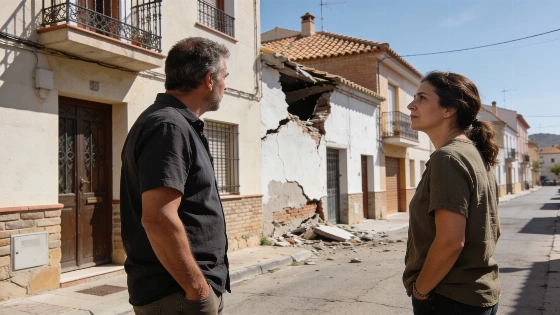
A 3.7 magnitude earthquake struck La Zubia, causing tremors in Granada and nearby towns. The quake was felt with varying intensity across the metropolitan belt. Authorities are monitoring aftershocks.
A 3.7 magnitude earthquake with its epicenter in La Zubia rattled Granada and several surrounding municipalities on Thursday evening, reviving concerns in a region still mindful of recent seismic episodes. The tremor, recorded just before 18:45, was initially reported by the Instituto Geográfico Nacional (IGN) as originating in Alhendín, but subsequent analysis confirmed La Zubia as the epicenter. The quake occurred at a depth of 5 kilometers, a figure revised from earlier estimates that placed it twice as deep.
Residents across the metropolitan area reported feeling the quake with varying intensity. According to IGN's scale, La Zubia experienced levels II-III out of ten, while Ogíjares, Armilla, Churriana, and Alhendín registered slightly stronger sensations at III-IV. The most pronounced effects were noted in Cenes de la Vega, where the intensity reached level IV. In the city of Granada itself, the tremor was also perceptible, though less severe than in the outlying towns.
This latest seismic event follows a similar episode at the end of July, when a quake of comparable magnitude unsettled the province. The recurrence of such tremors has heightened local vigilance, especially in areas along the metropolitan belt where seismic activity is more frequently felt. Earlier in the day, at around 8:30, the IGN also detected a smaller 1.9 magnitude quake in Gójar, which was noticeable in La Zubia and neighboring communities.
While no significant damage or injuries have been reported, the sequence of quakes has prompted authorities to maintain close monitoring of seismic patterns in the region. Emergency protocols remain in place, and local officials continue to advise residents on safety measures in the event of further tremors. The pattern of seismic activity in southern Spain is not unusual, but the clustering of events in recent months has drawn renewed attention to preparedness and risk assessment.
Granada's experience with natural phenomena is not isolated; other regions in Spain have also faced extreme weather and environmental events. For example, southern Valencia recently endured violent storms and record winds, as detailed in this report on severe weather in Alcoi and Villena. Such incidents underscore the importance of robust emergency response systems across the country.
Spain's seismic risk is generally moderate compared to other Mediterranean countries, but certain zones, particularly in Andalusia, are more susceptible due to geological factors. The IGN continuously updates its monitoring systems, providing real-time data to local authorities and the public. Residents in affected areas are encouraged to stay informed through official channels and to review safety guidelines for earthquake preparedness. As seismic activity remains unpredictable, ongoing vigilance is considered essential for minimizing potential impacts.