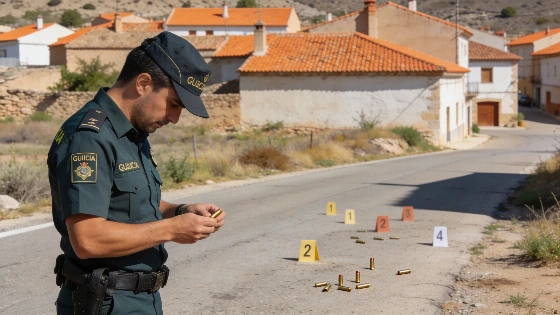
After nine months, Guardia Civil traced the killing of four stray cats in Teruel to a local hunter. The investigation relied on ballistic tests and veterinary autopsies. The case highlights growing attention to animal cruelty in rural Spain.
The Guardia Civil has resolved a rare and complex case of animal cruelty in La Puebla de Valverde, a small town in southern Teruel, after a nine-month investigation into the fatal shooting of four stray cats. The breakthrough came through detailed forensic work, including ballistic analysis and veterinary necropsies, which ultimately led to the identification of a local resident as the main suspect.
The incident began in October, when a resident discovered the bodies of four cats near the town center and alerted authorities. Initial examination by officers suggested the animals had been killed by gunfire. The case was assigned to the Seprona unit from nearby Mora de Rubielos, which specializes in environmental and animal protection crimes. The cats' bodies were sent to Zaragoza for necropsy, confirming death by firearm rather than airgun pellets, a detail that narrowed the search to licensed hunters in the area.
Investigators meticulously examined the scene, collecting spent cartridges and other evidence. These materials were sent to the Guardia Civil's criminalistics laboratory in Barcelona for ballistic comparison. The unique markings left by firearms on bullets and casings allowed experts to match the evidence to a specific weapon. This process, while routine in major crimes, is rarely applied with such rigor in cases involving stray animals.
As the investigation progressed, a shortlist of suspects emerged, all of whom held hunting licenses. The focus soon turned to a man in his fifties living in the area. He was summoned for questioning and voluntarily handed over his rifle for forensic testing. The weapon, which bore a religious medallion, was found to match the ballistic evidence from the crime scene. Despite the evidence, the suspect denied involvement and offered no explanation for the shootings.
The case has drawn attention for the scale of resources devoted to investigating the deaths of unowned animals in a rural setting. According to animal welfare lawyer Dulce Aguilera, such thoroughness is uncommon and could set a precedent for future cases. She notes that most reports of harm to stray cats involve poisoning or airgun attacks, and that local authorities are legally responsible for the welfare of free-roaming animals within their municipalities. In this instance, the mayor declined to comment on the case.
The investigation's findings have now been submitted to the Civil and Investigative Section of the Teruel Court of Instance. The accused faces potential penalties of 12 to 24 months in prison and a ban on holding a firearms license for up to five years. The case also highlights the growing role of veterinary forensic science in Spain, where collaboration between veterinarians and law enforcement is still developing. Studies from the Complutense University of Madrid suggest that animal abuse can serve as an indicator of broader patterns of violence, including domestic abuse and child maltreatment.
La Puebla de Valverde, with fewer than 500 residents, is known for its meat industry and proximity to the Javalambre ski resort. The town's unusual cat-shaped layout has become an ironic footnote in a case that has sparked debate about animal protection in rural Spain. As the legal process continues, the investigation stands out for its thoroughness and may influence how similar incidents are handled in the future.
Animal cruelty cases in Spain have increasingly come under scrutiny, especially following recent legal reforms that strengthen penalties for such offenses. The Spanish Animal Welfare Law, which came into force in 2023, obliges municipalities to protect stray animals and has led to more rigorous enforcement. While the country has made progress, challenges remain in ensuring consistent application of the law, particularly in rural areas where attitudes toward stray animals can differ from urban centers. The outcome of this case may serve as a reference point for future investigations and prosecutions involving animal abuse.