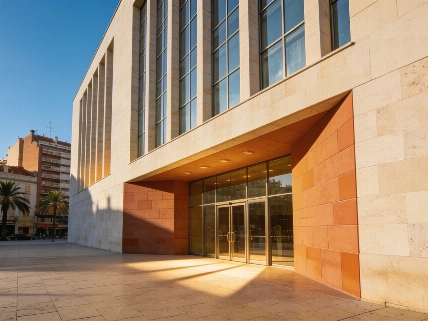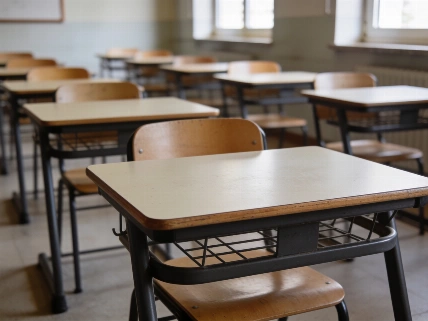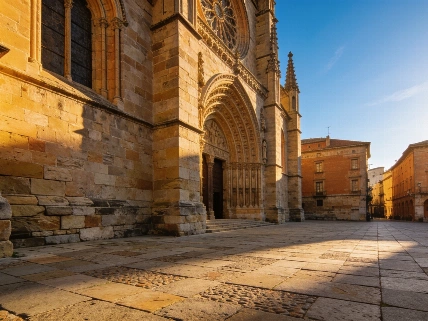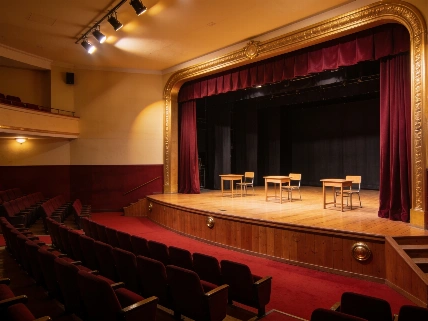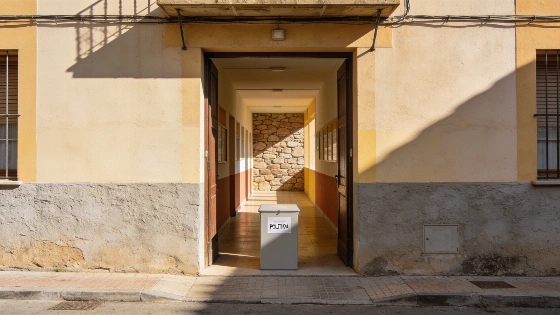
Aragón had 2,216 polling-station boards to set up for the 29 November general election, serving more than one million voters. The election was called by Real Decreto 806/2026, dated 5 October, which dissolved the Congress and Senate. In Andorra, Teruel, one board could not be formed at the start of the day because its titular member and substitute had not arrived. The official polling-place listing for Andorra includes Colegio Juan Ramón Alegre, at Calle San Isidro Labrador 2, as well as the town hall and Colegio Endesa. It assigns voters to different tables and rolls, including tables designated A, B and U.
The Guardia Civil found both and took them to the polling place, Aragón Government delegate Noelia Herrero said at a press conference. She said the board was then constituted normally. The Delegation of the Government in Aragón described the episode as an anecdote; Herrero did not say when the station opened or why the two members were absent.
People selected by lottery must serve on an electoral board. Under the Ley Orgánica del Régimen Electoral General (Loreg), unjustified absence can carry a prison sentence of three months to one year or a fine covering six to 24 months. Aragón’s Orden ECE/1574/2026, dated 27 October, also regulated paid leave for workers serving on polling boards and voters taking part in the election.
Herrero also reported graffiti at two polling-place schools in Zaragoza. City workers cleaned it quickly, she said. A separate pre-election dispute concerned coded posts during the polling blackout: the Partido Popular in Valencia asked the Junta Electoral Central to examine three posts, as covered in an earlier election-board report.
The election is choosing 13 members of Congress and 12 senators from Aragón. Zaragoza returns seven members of Congress; Huesca and Teruel each return three. Each province elects four senators. Voting takes place at 1,012 polling locations across the region’s 731 municipalities, and postal services accepted 29,648 postal votes. Polling stations close at 8pm.
Pomer and Urriés in Zaragoza were among the first municipalities to report their boards constituted, at 8.01am. In Huesca, Igriés and Alcolea de Cinca reported at the same time. Albalate del Arzobispo was the first in Teruel.
More than 27,500 people are working on or supporting the election operation, according to the Delegation. The deployment includes more than 4,000 police officers, including over 3,600 members of the national security forces alongside local police.
The Civil Protection plan and the Red Cross are also providing transport to polling stations for people with reduced mobility. Zaragoza province has 77 volunteers and 16 vehicles; Huesca has 40 volunteers and ten vehicles; Teruel has 25 volunteers and four vehicles. Requests can be made throughout the day on 976 224 880 in Zaragoza, 974 222 222 in Huesca or 648 699 559 in Teruel.