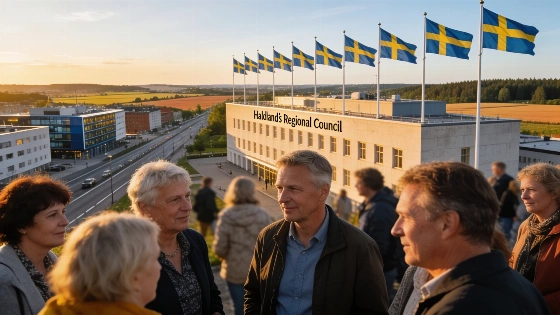
Halland’s future direction is under debate as the region weighs continued centre-right leadership. Economic management, healthcare quality, and support for local businesses are central to the discussion.
Halland is approaching a pivotal moment as the region considers whether to maintain its current centre-right leadership or shift towards alternative political approaches. The debate has intensified in Falkenberg, where the focus is on safeguarding economic stability, ensuring efficient healthcare, and supporting both urban and rural communities.
Unlike many other Swedish regions struggling with rising healthcare queues and budget deficits, Halland has managed to avoid major setbacks. This relative strength is attributed to a policy of strict financial discipline and clear priorities, with resources directed towards core services such as patient care and elderly support. The ongoing discussion centres on whether to continue this model or risk changes that could bring higher taxes and increased bureaucracy.
Local businesses in Falkenberg have highlighted the need for improved conditions to foster growth, while families and rural residents are calling for reliable infrastructure and quality public services. The region’s approach to healthcare remains a central issue, with demands for better accessibility and professional standards, especially as other parts of Sweden face longer waiting times and service closures.
There is also a strong emphasis on elderly care, with calls for more staff and a focus on continuity and quality. The underlying principle of the current centre-right policy is trust in individuals—families, entrepreneurs, and welfare workers—rather than expanding administrative structures. This approach is seen as key to maintaining Halland’s reputation for high living standards and security.
As the election approaches, residents are being asked to choose between continued economic responsibility and the possibility of new political experiments. The outcome will determine whether Halland can preserve its current strengths or face the challenges seen elsewhere in Sweden. The debate echoes broader national discussions, such as those highlighted when calls for leadership changes in Spain sparked concerns about political direction and stability.
For context, Halland is a region in southwestern Sweden known for its strong welfare services, attractive natural environment, and robust local economy. The area’s ability to maintain short healthcare queues and balanced budgets has set it apart from other regions. However, demographic changes and increasing demands on public services mean that future leadership decisions will have significant consequences for residents’ daily lives, from access to healthcare and education to the vitality of local businesses and rural communities.