Mounting a Spanish flag on your balcony may seem harmless, but it can trigger legal disputes and hefty costs. Spanish law does not ban flags outright, yet issues arise if building rules or safety are breached. Here’s what homeowners need to know.
Mounting a Spanish flag on your balcony during a major football tournament or national holiday is a familiar sight across Spain. Yet, what appears to be a simple gesture of pride can quickly become a legal headache for homeowners, with potential costs reaching €3,000 if things go wrong.
Spanish law does not explicitly prohibit residents from displaying a flag on their private property. However, the situation changes when the flag affects the building’s exterior, causes damage, or violates internal community rules. According to Article 396 of the Civil Code, facades—including balcony exteriors and their appearance—are considered communal property. This means any alteration, even temporary, can fall under the scrutiny of the homeowners’ association.
When Problems Arise
The Horizontal Property Law allows owners to make changes inside their homes, provided these do not compromise the building’s safety, structure, or external appearance, nor infringe on the rights of other residents. Any modification to communal areas, including facades, requires prior approval from the community.
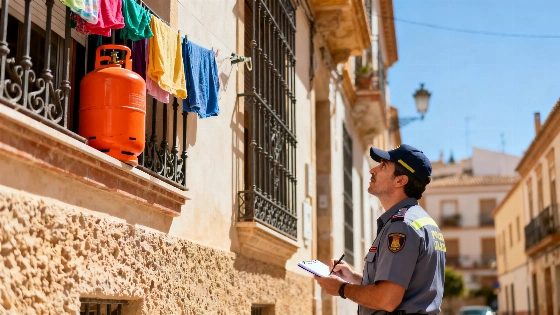
In practice, a small, temporary flag that is securely attached and does not disturb neighbors rarely causes issues. Problems typically arise when the flag is fixed with screws or nails, installed with rigid supports, encroaches on another resident’s space, or is poorly secured and risks falling onto the street. Noise from flapping fabric, oversized banners, or explicit bans in the community’s statutes can also trigger disputes.
Importantly, the law does not target the content of the flag, but rather the impact on the building, safety, and communal harmony.
Legal Action, Not Fines
Homeowners’ associations do not have the authority to impose direct fines on residents for hanging a flag. As clarified by the General Council of Property Administrators, the Horizontal Property Law does not grant sanctioning power to communities. Instead, if a flag is deemed to breach community rules or damage the building, the association can formally request its removal.
If the resident ignores this request, the matter can escalate to a meeting of owners and, ultimately, to court. Should a judge side with the community, the resident may be ordered to remove the flag, repair any damage, and cover legal costs. These expenses—not an automatic fine—are where the total can approach €3,000, especially if repairs and court fees are involved.
Special Cases: Protected Buildings and Local Ordinances
The rules become stricter for protected buildings, historic districts, or areas governed by municipal aesthetic regulations. In such cases, local authorities can intervene if a visible element is altered or a city ordinance is breached. The Spanish Historical Heritage Law allows for significant penalties if protected property is affected without authorization. Municipal rules may also regulate what can be displayed on balconies or facades, particularly if it poses a risk, creates mess, or disrupts the urban image—regardless of the flag’s symbolism.
In summary, hanging a Spanish flag on your balcony is generally allowed if it is temporary, safe, does not damage communal property, and does not violate internal or municipal rules. However, ignoring these boundaries can lead to costly legal consequences, especially in buildings with special protections or strict community statutes.
For homeowners, the safest approach is to check community rules and local ordinances before displaying any item on the building’s exterior. This simple step can prevent disputes and unexpected expenses.