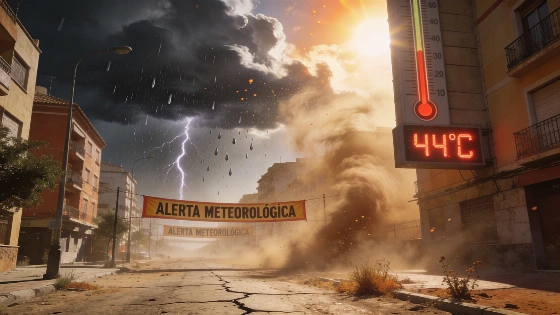
Spain faces a critical day as temperatures soar to 44°C in the southeast. Authorities issue red alerts for Murcia and Valencia. Violent storms with hail and strong winds threaten the region.
Spain's southeast is bracing for a dramatic end to the current heatwave, with the State Meteorological Agency (Aemet) warning of maximum temperatures reaching 44°C in Murcia, Valencia and Alicante. Red alerts have been activated for these areas, as the risk of severe storms, hail, and damaging wind gusts intensifies. The Mediterranean arc and the Ebro valley are expected to see the most significant temperature spikes, while other regions such as Andalucía, the northeast and southern Castilla-La Mancha will also experience highs around 40°C.
According to Aemet, most of the country will see clear skies or high clouds, except for northern Galicia and the western Cantabrian coast, where low clouds and morning mist are likely. Dust haze (calima) will persist in the east and south of the peninsula and in the Balearic Islands, reducing air quality and visibility. Afternoon cloud build-up is forecast to trigger intense showers and thunderstorms in Almería, Murcia and Alicante, with a high probability of hail and very strong wind gusts. These storm systems could also affect Ibiza and Formentera later in the day.
Nighttime relief will be limited, as minimum temperatures are expected to remain above 20°C across the southern half, eastern peninsula and Balearic Islands, and may not drop below 25°C along the Mediterranean coast and Guadalquivir valley. Winds will generally be light, with coastal breezes dominating, but storm-driven gusts could be severe in affected areas. In the Canary Islands, intervals of low cloud are forecast for the northern slopes, while the south remains clear. Calima will be more pronounced in the eastern islands, and temperatures will rise slightly, with moderate to strong winds and possible very strong gusts in exposed locations.
Regional forecasts highlight the diversity of conditions across Spain. Galicia and Asturias will see intervals of cloud and local fog, with isolated thunderstorms possible in mountainous areas. The Basque Country, Navarra and La Rioja expect mostly clear skies, with temperatures climbing in some areas—up to 38°C in Navarra's Ribera. Aragón and Catalonia will contend with suspended dust and rising temperatures, especially in the Ebro valley and western depression, where 42°C is possible. Castilla y León, Extremadura and Madrid will experience mostly stable weather, though Madrid could see highs of 38°C outside the mountains. Castilla-La Mancha faces a risk of storms in the southeast, with red alert thresholds nearly reached in Albacete.
In the Valencian Community, the focus is on the interior and pre-coastal areas of Valencia and Alicante, where 43°C is forecast and afternoon storms could bring hail and violent winds. Murcia faces similar threats, with notable temperature increases inland and the risk of severe convective storms. Andalucía will see a split, with the Atlantic side cooling slightly and the Mediterranean side heating up, particularly in the northeast where storms may develop. The Balearic Islands will have another tropical night, with the chance of strong gusts in Ibiza and Formentera. The Canary Islands will see temperatures above 34°C in southern and western Gran Canaria and the southeast of the eastern islands, with strong winds in exposed areas.
These extreme conditions follow a pattern of increasingly frequent and intense heatwaves in Spain, often accompanied by Saharan dust and sudden storms. As highlighted in a recent report on the impact of Saharan dust and muddy rains across the country, the combination of high temperatures and calima can disrupt daily life, affect health, and increase the risk of wildfires. Authorities continue to urge residents to take precautions, especially in regions under red alert, and to stay informed as weather conditions evolve rapidly.
Spain's vulnerability to extreme weather events has grown in recent years, with heatwaves now lasting longer and affecting wider areas. The Aemet's alert system plays a crucial role in public safety, providing timely warnings for both heat and storms. Residents in affected regions are advised to limit outdoor activities during peak heat, stay hydrated, and monitor official updates. The ongoing situation underscores the importance of preparedness and adaptation as climate patterns shift across the Iberian Peninsula.