Mass graves in Spain continue to yield evidence of Francoist violence. Archaeologist Alfredo González Ruibal documents the suffering of families and children. His research uncovers personal stories and the scale of social devastation.
Beneath the soil in Spain, hundreds of children and adults have been uncovered—reminders of a regime that relied on fear and erasure. The remains of 322 children in Malaga, many under ten, and a note found in Paterna—"Soy Manuel Lluesma, ejecutado el 29 del 12 de 1942. Dejo hijos"—have forced Spain to reckon with the brutality that shaped its recent history.
Archaeologist Alfredo González Ruibal, who won the National Essay Prize in 2024, has spent nearly twenty years bringing these stories to light. His book, "País en ruinas, historias enterradas de la España franquista (1939-1975)", gathers evidence from mass graves, concentration camps, and shantytowns. Each dig uncovers not just bones and objects, but the systematic violence that targeted families, women, and children long after the war ended. In interviews, González Ruibal links the mass graves directly to Francoist policies meant to dehumanize the defeated, a theme he returns to in his latest work published in 2026.
By September 2026, ongoing excavations in Campillos, Malaga province, had already recovered 119 bodies from mass graves, highlighting the continued scale of the search for victims.
In Malaga, some graves hold bodies stacked six layers deep. Neonates, many who died at birth because of their mothers' poor health and prison conditions, were placed at the edges of the pits, their small bodies filling gaps between the executed. The authorities' goal was clear: eliminate opposition, erase memory, and rule over a landscape marked by loss. Recent reports from the University of Malaga and the Andalusian government confirm this pattern, as they continue exhumation projects to recover the identities of those lost.
Paterna, near Valencia, holds more than 2,200 victims. Some graves reached the water table, preserving clothing and even handwritten notes in bottles. The gravedigger, Leoncio Badía, left messages with the dead, hoping families might one day find them. He was recognized decades later with a posthumous honor and a statue in the cemetery. Paterna remains a central site for memorialization, with its landscape used to restore the names and stories of the victims.
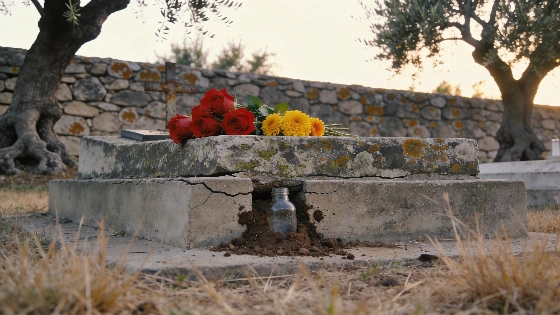
Not every burial was anonymous. In Villaverde del Ducado, a village in Guadalajara, locals tended the grave of an unknown young man for eighty years, leaving flowers and protecting his remains from animals. When González Ruibal's team exhumed the body, they found religious medals—evidence of a community quietly refusing to forget, even as official Spain looked away.
In Galicia alone, recent research has documented approximately 4,591 deaths resulting from Francoist repression, with around 3,265 of these being extrajudicial killings. This regional data underscores the widespread and systematic nature of the violence across Spain.
The research goes beyond graves. Excavations in Madrid's university district revealed the stark difference between the diets of Francoist and Republican soldiers—thousands of animal bones for the former, near-starvation for the latter. In the trenches, everyday objects like perfume bottles and inkpots spoke of interrupted lives: women sending tokens to men at the front, soldiers writing home to prove they were still alive.
After the war, violence shifted from the battlefield to daily survival. Families lived in abandoned cemeteries or makeshift shacks, generations stunted by hunger and disease. In the penal colonies of the Valle de los Caídos, prisoners made shoes from tire rubber and set traps for birds, forced to invent a world from scraps as the regime stripped them of everything else.
Between 1939 and 1942, at least 200,000 excess deaths from starvation and epidemics were recorded. Even outside prison, poverty was inescapable. By the 1960s, 400,000 families lived in self-built slums on the edges of major cities, their children playing among rat bones and broken toys. The effects of this deprivation are still visible in the health of older generations.
González Ruibal's work is personal as well as academic. He dedicated his book to his mother-in-law, María Mayorgas, a child of the defeated. While researching, he discovered his own grandfather had served as a prosecutor during the regime's most violent years, signing off on death sentences. This revelation, hidden for decades, forced him to confront the silence and complicity that allowed such crimes to continue. In recent publications, González Ruibal has also criticized how Spain's transition to democracy left the stories of repression victims, especially early resisters, outside the public narrative.
Spain's struggle with its past is not unique. The country's reluctance to address the legacy of Francoism echoes in other debates about memory and identity, as seen in the way language and history are contested in public life. The persistence of these wounds is clear in the ongoing search for truth and dignity for the victims, a process that remains unfinished. As a previous investigation into cultural shifts has shown, the fight to reclaim history is far from over. According to recent statements by Spanish politicians, the need for democratic memory and the restoration of victims' names remains a politically relevant issue even in 2026.
What emerges from González Ruibal's excavations is a Spain that cannot afford to forget. The evidence is not just in the graves, but in the everyday objects, the hunger, and the silence that followed. Refusing to confront these realities is itself a form of complicity. Only by facing the full extent of the regime's violence—against bodies, families, and memory—can Spain hope to build a future that is honest about its past. The work of unearthing these truths is slow and painful, and it demands more than official gestures or delayed recognition. It requires a collective willingness to see, name, and remember what was buried for so long.