The Gràcia district launches its annual festival with over 900 events. Residents voice alarm over rising rents and tourist influx. Calls grow to defend local identity and Catalan language.
The Festa Major de Gràcia opened in Barcelona with a sharp focus on the district’s housing crisis and the impact of mass tourism. At the festival’s official launch, journalist and historian Vicenç Sanclemente warned that the neighborhood’s character is under threat from speculative investment and the rapid transformation of residential buildings into colivings. He argued that unchecked market forces are pushing out long-term residents and eroding the area’s traditional identity.
Sanclemente, who has chronicled the history of the festival since 1990, delivered his speech from the district headquarters’ balcony, highlighting the crucial role of local associations in shaping the event. He stressed that the festival is not just a street party, but a product of collective effort by neighbors determined to preserve their way of life. The speech resonated with many in the crowd, as the district continues to grapple with soaring rents and the visible effects of tourism-driven commerce.
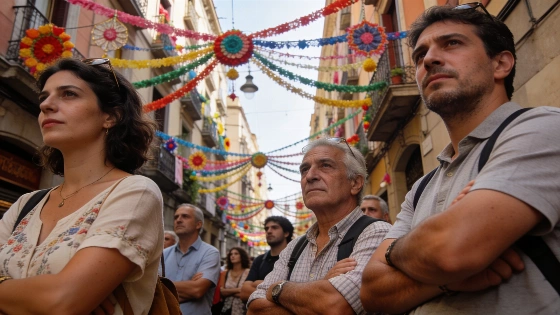
This year’s Festa Major, running from August 15 to 21, features 23 decorated streets and plazas and a packed schedule of around 900 free activities, including concerts, family events, and traditional celebrations. The festival program also introduces a new space for children and teenagers at Plaça Joanic and maintains the quieter ‘nit tranquil·la’ on August 17 to allow residents some respite. Organizers have adapted several activities to cope with high temperatures, providing water points and adjusting schedules. Security measures remain in place, with the Punt Lila, safe routes, and joint patrols by the Guardia Urbana and Mossos d’Esquadra.
Much of Sanclemente’s address focused on the loss of affordable housing and the displacement of locals. He described a growing divide between investment funds and ordinary citizens, warning that the future of Gràcia cannot be left to speculative interests. The historian also criticized the city’s approach to tourism, pointing to infrastructure changes like escalators to Park Güell that prioritize visitor convenience over neighborhood needs.
While Sanclemente spoke, the festival’s international draw was evident. A Japanese family, staying in a tourist apartment for €150 a night, watched the festivities from outside a trendy matcha shop—one of many new businesses catering to visitors. The family, unfamiliar with Spanish or Catalan, enjoyed the spectacle of batucadas and giant figures, unaware of the underlying tensions addressed in the opening speech.
The festival’s traditional street decoration contest remains a highlight, with prizes to be awarded on August 19. The event’s evolution reflects broader debates about the future of Barcelona’s neighborhoods. As noted in recent coverage of Gràcia’s preparations, organizers have had to balance innovation, safety, and the preservation of local customs amid changing urban dynamics.
Barcelona’s Gràcia district has long been a symbol of community activism and cultural pride. The Festa Major, dating back to the 19th century, is recognized for its elaborate decorations and grassroots organization. In recent years, however, the area has become a focal point for debates over gentrification, short-term rentals, and the sustainability of urban tourism. The city council has introduced measures to regulate tourist apartments and support affordable housing, but many residents remain concerned about the pace of change. The festival’s opening this year underscores the ongoing struggle to balance tradition, community, and the pressures of a global city.