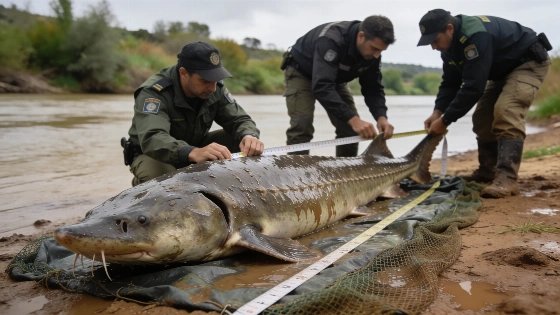
A single introduction of Silurus glanis in 1974 has led to its domination of major Spanish rivers, threatening native species and challenging conservation efforts. Authorities now face a complex battle to control this invasive giant.
In 1974, German biologist and angler Roland Lorkowsky released 32 juvenile Silurus glanis, or wels catfish, from the Danube into the Segre River, part of the Ebro basin. More than five decades later, this act has transformed the ecological balance of Spain’s largest rivers, with the species now entrenched in the Ebro, Tajo, Guadalquivir, Júcar, and the Catalonia river district, according to the 2025 update from MITECO.
The exact number of fish released remains disputed—some sources suggest thousands, but Lorkowsky himself cited 32. Subsequent studies, including those on Ebro bioinvasions, confirm this initial figure but point to likely further introductions in areas like Mequinenza and Riba-roja. What began as a single act for sport fishing has since become a textbook case of how invasive species can spiral into a national management crisis.
From Hobby to Hazard
Silurus glanis is Europe’s largest freshwater fish, capable of reaching 2.5 meters in length and weighing over 100 kilograms. Its scaleless body, wide mouth, and six sensory barbels make it a formidable predator, especially in deep, murky waters where it thrives. The species is highly adaptable, tolerating moderate pollution and preferring to hunt at dusk or night. Its opportunistic diet includes fish, amphibians, crayfish, rodents, and even water birds.
Once established, the wels catfish disrupts local food webs, preys on native fauna, and competes with indigenous species like barbel for food and habitat. This pressure compounds existing threats to vulnerable species such as the Iberian crayfish, already struggling with drought, habitat loss, and other invasive competitors.
Expansion Across Spain
Since its initial release, Silurus glanis has spread far beyond the lower Ebro. Scientific records show its arrival in the Tajo by 2001, with subsequent sightings in the Ter (2003–2004), Llobregat, and Guadalquivir (2011). The 2025 MITECO report confirms its presence in all major river basins of eastern and southern Spain. This expansion has fueled tension between sport fishing enthusiasts and conservationists. While the species was introduced for angling, authorities now warn of its damaging effects on habitats, biodiversity, and native fisheries. In the Guadalquivir, researchers have raised concerns that established catfish populations could threaten valuable species, including the sea lamprey.
Efforts to remove the catfish are costly and often ineffective in large, interconnected river systems. Even successful removals can be undone by new, often illegal, introductions—a pattern seen in other high-profile disputes, such as the legal battle over a superyacht reported by RUSSPAIN, where individual actions have far-reaching consequences.
What Anglers Must Know
Spanish law is clear: Silurus glanis is listed in the Spanish Catalogue of Invasive Alien Species under Royal Decree 630/2013. It is illegal to introduce, transport alive, or return captured specimens to the water. MITECO advises anglers to photograph any catch, record the location, and notify environmental authorities. Complete eradication is only feasible in isolated lakes or small reservoirs, not in major rivers. As a result, early detection, regular monitoring, and advanced techniques like environmental DNA and acoustic tracking are now prioritized.
The national aquatic conservation strategy, approved in July 2024, calls for coordinated action between administrations and tailored protocols for each water body. Preventing new releases remains the central pillar of this approach.
Spain’s experience with Silurus glanis highlights the long-term risks of introducing non-native species, especially when initial motivations—such as sport fishing—overlook ecological consequences. The challenge now is to contain the damage and protect what remains of the country’s native river life.