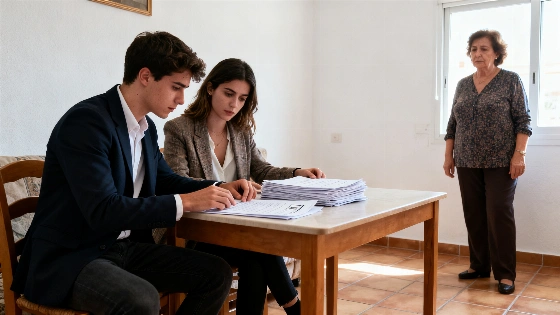
For many young adults in Spain, financial independence remains out of reach well into their twenties and thirties. Yet the country’s basic anti-poverty benefit, the Ingreso Mínimo Critical (IMV), is not automatically off-limits to people still living in the family home. Adults aged 23 and over can apply while sharing a household with their parents if they meet the conditions for independent status and economic vulnerability.
Eligibility depends on more than age or address. Applicants must not be married, unless they are in the process of separating or divorcing, or part of a registered domestic partnership. Crucially, they must meet the rules to be treated as a separate beneficiary or household unit, not as part of their parents’ IMV unit. Sharing a physical address does not decide the issue by itself: Social Security assesses household composition alongside the applicant’s financial position and personal circumstances.
Independence Requirements by Age
For those aged 23 to 29, the requirements are stricter. Social Security requires proof of legal and effective residence in Spain, along with evidence that applicants lived independently from parents, guardians or encourage carers for at least the two years before applying. Their official address must have been different from their parents’ during that period. They must also have been registered with Social Security or a mutual insurance scheme for at least 12 months, consecutively or otherwise.
Applicants aged 30 or older face a less demanding standard: they must show that they lived separately from their parents for at least the year immediately before applying, unless the change in living situation followed the death of a parent or guardian.
Income and Asset Limits for 2026
The IMV supplements the income of people whose earnings fall below a guaranteed threshold. In 2026, the minimum guaranteed income for a single adult is €733.60 per month. The benefit is calculated as the difference between this amount and the applicant’s countable income, provided the resulting payment is at least €10 per month. In practice, a single person can qualify if their monthly income is below €723.60, with the final amount adjusted to their financial situation.
Asset limits also apply. To qualify as economically vulnerable, an individual’s net assets, excluding their primary residence, must be below €26,409.60 in 2026. Social Security reviews income and assets when determining eligibility, and applicants must continue to meet the criteria for as long as they receive the benefit.
Residency and Ongoing Obligations
Applicants must have lived legally and continuously in Spain for at least the year before applying. Exceptions cover minors joining a household and people affected by trafficking or sexual exploitation. They also apply to women fleeing gender-based violence. Once approved, recipients must report any changes in their circumstances that could affect eligibility and file an annual tax return.
Social Security data show that the IMV reached 862,859 households and supported over 2.6 million people in May 2026. The average monthly payment was €538.70 per household. The benefit remains a safety net for those struggling to achieve financial independence, especially as Spain’s economic field continues to evolve. Spain’s tax authority has also recently processed impressive refunds to pensioners, as detailed in this analysis of historic mutual fund reimbursements.
The IMV is a national economic benefit administered through Spain’s Social Security system and the Ministry of Inclusion, Social Security and Migration. The ministry’s electronic office lists an official procedure titled “Application for Minimum Critical Income,” the government channel for applications and related services. Applicants living in a parent’s home must show that they meet the statutory requirements for an independent household unit. Entitlement is determined administratively after their circumstances are assessed. The application requires careful documentation, so prospective applicants should follow the ministry’s current procedure and documentary requirements to support their case for independence and financial need.