Over a thousand migrant minors in the Canary Islands formally opposed being moved to mainland Spain. Many had already built strong ties, found work, or were close to finishing studies on the islands.
More than a thousand unaccompanied migrant minors in the Canary Islands have formally objected to being transferred to mainland Spain, according to figures closed as of July 31. Many of these young people, some just months away from completing vocational training or already integrated into local communities, argued that uprooting them would disrupt their progress and support networks. The issue has gained urgency as the islands’ reception centers reached capacity, prompting the government to initiate transfers to other regions.
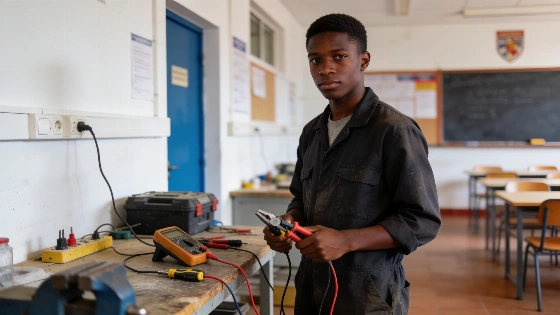
Unlike the typical expectation that newly arrived minors would seek a quick move to the Peninsula, a significant number in Tenerife and other islands chose to stay. Some, like 17-year-old Saliou from Senegal, cited established friendships, trusted host families, and ongoing studies as reasons to remain. Saliou, known locally as 'El Canario' for his adopted accent, documented his refusal in writing, emphasizing his commitment to finishing his electricity training program.
Official data shows 1,090 objections in the Canary Islands, 204 in Melilla, and none in Ceuta since the transfer process began last summer. While some regional leaders publicly resisted accepting relocated minors, many of the minors themselves were determined not to leave the islands. Authorities in the Canary Islands say that, in most cases, the minors’ wishes were respected, especially when their arguments aligned with the principle of the 'best interests of the child.' However, not all appeals were accepted, particularly when based solely on social ties.
As transfers proceeded, some mainland municipalities reacted with open hostility, with local officials and residents expressing opposition to hosting the minors. In contrast, in the Canary Islands, the controversy centered on families and communities fighting to keep the young people they had come to support. Many minors had become active in their neighborhoods, joined sports teams, and found part-time jobs, gradually building a sense of belonging.
For some, the decision to stay was clear from the outset. Babacar Gueye, who had spent over three years in Tenerife and found stable work as a waiter, refused transfer even though he had family on the Peninsula. He successfully appealed twice, with support from his host family and legal advisors, and continues to work in a positive environment.
Authorities stress that no minor was forced onto a plane against their will, and there have been no reports of anyone seeking to return to the islands after transfer. While some cases of difficult adaptation and local resistance made headlines, most of the work was handled quietly by dedicated civil servants. In Ceuta, similar efforts have been noted, as highlighted in coverage of the region’s challenges with migrant arrivals, such as in this report on Ceuta’s overwhelmed health and security services.
As many minors reached adulthood during the process, new measures were introduced to help them transition out of youth centers. The Canary Islands opened nearly ten new facilities with 200 places for young adults, and some were placed in hotels offering hospitality training and employment. Others were relocated to the Peninsula only when a solid support network was in place, often with help from organizations like Cáritas through the Urdimbre project, which focuses on securing jobs and housing.
Teachers have played a key role in supporting minors who showed academic promise. Saliou completed his vocational degree in electricity and recently started work in the field, though he faces challenges enrolling in higher-level courses due to limited places. Abdoulah, another young migrant, finished his basic vocational training, now works in a bakery, and continues to play football. He chose to stay in the Canary Islands, where his host family offered him a place to live after he turned 18, saying he did not want to start over on the Peninsula.
The Spanish government’s Integration and Citizenship Plan, launched by Pedro Sánchez, aims to create 100,000 new vocational training places to help integrate young migrants into high-demand sectors. However, the pace of implementation remains a concern as these young people continue to build their lives in Spain.
For context, Spain has seen a significant increase in arrivals of unaccompanied minors in recent years, particularly in the Canary Islands, Ceuta, and Melilla. The challenge of integrating these young people is compounded by limited resources and varying levels of local acceptance. The government’s approach has focused on balancing the needs of the minors with the capacities of host communities, but the process remains complex and often contentious. The experience in the Canary Islands highlights both the difficulties and the resilience of young migrants determined to forge a future in Spain.