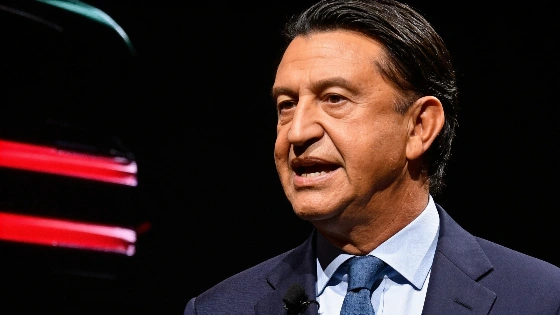
Hyundai CEO José Muñoz openly acknowledges the strength of Chinese automotive technology and the scale of the challenge facing European and US carmakers as Chinese brands gain ground in key markets.
When José Muñoz, CEO of Hyundai, calls Chinese car technology "incredible," he is not just being polite. He is warning the industry that the competition has changed. Chinese automakers are no longer distant players—they are now direct rivals, already taking up to 10% of the European market and outselling established brands like Mercedes-Benz, Toyota, Hyundai, and KIA in plug-in hybrid sales.
Muñoz is clear: Chinese brands are not a future threat. They are here, and their impact is visible. In Spain, Chinese brands now hold a 14% market share—the highest in the EU. In the UK, their share is around 15-16%. These are not forecasts; they are current figures. The European Automobile Manufacturers Association (ACEA) reports that Chinese brands made up more than 9% of the EU market in the first half of 2026, showing just how quickly their presence is growing, according to Reuters.
In June 2026, Chinese brands accounted for about 34% of the European plug-in hybrid (PHEV) market, surpassing many traditional players in this segment.
Unlike in the past, when China required joint ventures from foreign carmakers, today’s Chinese manufacturers are entering Europe on their own. Even with extra tariffs on Chinese electric vehicles, the flow has not slowed. Companies like Chery and SAIC are assembling cars in Spain, but the technology and main components are still Chinese. The price difference is significant: in Spain, France, and Italy, Chinese cars can be 30-40% cheaper than their competitors. Reuters quotes Muñoz, who says the level of innovation and speed of improvement from Chinese brands are "incredible."
The United States is trying to slow things down with a 100% tariff on Chinese electric vehicles and a planned ban on cars with software linked to the Chinese government from 2027. There are exceptions—Volvo, for example, can manufacture in South Carolina, while Polestar cannot. Even Donald Trump, known for his protectionist views, has said he would welcome Chinese manufacturers if they build cars and create jobs in the US. Ford’s CEO, Jim Farley, expects Chinese brands to arrive in America within a decade. According to US regulations, the final rule on connected vehicles related to China and Russia will ban the sale of cars with certain software starting with the 2027 model year, with hardware restrictions to follow.
For Hyundai, the challenge is real. Muñoz, who previously led Nissan’s operations in China, knows what is at stake. He is pushing Hyundai to develop advanced driver assistance systems, aiming to match Tesla’s FSD with SAE level 2+ and 2++ technology, developed with Nvidia. Production is planned for 2028, though it may slip to 2029. Muñoz says Hyundai must develop key technologies like batteries in-house to stay competitive.
Despite the EU introducing higher tariffs on Chinese electric vehicles after a subsidy investigation, the growth of Chinese sales has not stopped. European authorities are now considering new measures, such as limiting the share of Chinese hybrids to 15% or imposing additional tariffs if exports do not slow down.
Reuters
Chinese expansion is not just about new brands. The rapid growth of plug-in hybrids and electric vehicles from China has already changed the European market. As reported earlier, Chinese models are now common in Spain and more than 30 other markets, with sales numbers that would have seemed unlikely just a few years ago.
According to Reuters, Muñoz does not want to shut out Chinese competition. Instead, he calls for a realistic look at the technological and economic facts. His message: tariffs and regulations may slow Chinese brands, but they will not stop them. The real competition will be about innovation, cost, and meeting customer needs—faster, cheaper, and smarter.
Muñoz’s assessment shows an industry at a turning point. European and American carmakers can no longer rely on their history or on protectionist policies. The Chinese challenge is not just about price—it is about a drive for technological leadership. For Hyundai and its competitors, keeping up will require matching that pace, or risk falling behind in a market that is changing faster than many expected.