
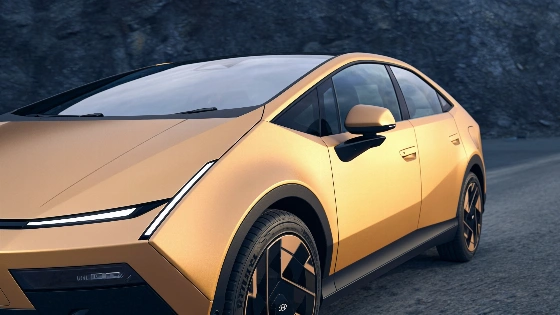
Hyundai’s IONIQ 3 arrives in Spain with a starting price below thirty thousand euros and a headline range of 496 km. The compact electric car targets city drivers and long-distance commuters alike, shaking up the affordable EV segment.
Spanish drivers looking for an electric car with real range and a sharp price now have a new option. Hyundai has launched the IONIQ 3, promising up to 496 km on a single charge and a base price just under thirty thousand euros. This is a direct shot at both established rivals and Hyundai’s own Kia EV2. The goal is clear: win over buyers who want an affordable EV that can handle more than city errands.
The base IONIQ 3 starts at 29,995 euros. That’s before any discounts. Hyundai’s current offer, which combines brand financing and the Plan Auto+ incentive, can drop the price to 21,535 euros. Not everyone will qualify. The final figure depends on financing terms and government support. Hyundai is betting big on this pricing. The company expects thousands of new customers by 2027. Europa Press reports that the IONIQ 3 is built at Hyundai's Izmit plant in Turkey. European sales are set for the third quarter of 2026.
The IONIQ 3's base version with a 42.2 kWh battery offers a WLTP range of 344 km, while only the Long Range 61 kWh variant achieves the headline 496 km figure.
The IONIQ 3 measures just over 4.15 meters long. It’s aimed at drivers who want a compact hatchback, not a bulky SUV. The five-door Aero Hatch body is built for both aerodynamics and space. The boot holds 322 liters, or up to 441 liters with the extra compartment. The N Line version is a bit longer at 4.17 meters and adds a sportier look. Electrive notes the wheelbase is 2,680 mm. There’s also a Megabox under the floor, adding 119 liters of storage.
Hyundai’s battery choices break the usual pattern. The smaller 42.2 kWh LFP battery gives 147 CV. The bigger 61 kWh NMC pack offers 135 CV but stretches the range to 496 km (WLTP). Hyundai is focusing on efficiency, not just power. This car is for drivers who care about distance, not drag races. Charging is quick. The IONIQ 3 can go from 10% to 80% in about 29 minutes at up to 110 kW DC. On AC, it can reach up to 22 kW, depending on the version. There’s also an optional V2L feature. That lets the car’s battery power external devices. It’s handy for more than just city trips.
The IONIQ 3's acceleration is not its main selling point: both battery versions use front-wheel drive and deliver 250 Nm of torque, with 0-100 km/h times of about 9 seconds for the standard battery and 9.6 seconds for the Long Range. AC charging at 11 kW is standard, while 22 kW is available as an option.
The competition is fierce, even inside Hyundai’s own group. The Kia EV2 is shorter at 4.06 meters but has a slightly bigger boot—up to 362 liters. Its starting price is 20,330 euros, undercutting the IONIQ 3. The EV2 also comes with two battery options: a 42.2 kWh pack for up to 317 km and a 61 kWh version that reaches 453 km. Both can fast-charge from 10% to 80% in about half an hour. The EV2 can’t match the IONIQ 3’s top range, but its lower price and SUV style will attract a different crowd.
Put side by side, the IONIQ 3 stands out for its longer range and classic hatchback shape. It’s better for drivers who need to go beyond city limits. The Kia EV2 is built for urban buyers who want a lower price and a compact footprint. Both cars share Hyundai Motor Group’s DNA, but their differences show how the electric market is splitting. Electrive points out the IONIQ 3’s main edge is range: 344 km versus 317 km in standard trims, and 496 km versus 448 km in Long Range versions.
Hyundai doesn’t want the IONIQ 3 seen as a stripped-down entry model. The car introduces the PLEOS Connect multimedia system, running Android Automotive. Higher trims get a central screen up to 14.6 inches. Safety and convenience are covered. There’s a 360-degree camera, advanced parking aids, and a full set of driver assists. Hyundai wants a premium feel at a mainstream price.
Price is still the IONIQ 3’s main weapon. By keeping the base under thirty thousand euros—and offering even lower rates with financing—Hyundai is chasing Spanish buyers who have held back from going electric. The company expects most to pick the 61 kWh battery. That shows drivers want more range, not just a low sticker price.
The Spanish electric car market is changing fast. The IONIQ 3’s arrival is a turning point. Its mix of range, practicality, and sharp pricing puts pressure on rivals like the Renault 5, Volkswagen ID. Polo, CUPRA Raval, and Peugeot e-208. It also heats up the contest with the Kia EV2. Both brands are fighting for buyers who want value, but each takes a different path.
Other carmakers are moving too. Ford recently cut the price of its Puma hybrid, as reported earlier. The battle for Spanish drivers is on. Hyundai’s IONIQ 3 isn’t just another EV. It’s a clear signal: buyers no longer have to choose between range and price. The real question is simple. Will Spanish drivers take the leap? The IONIQ 3 sets a new bar. Competitors will have to respond.