Hyundai’s Ioniq V debuts in China with up to 650 km range and a starting price near 13,100 euros. The sedan’s radical design and tech could soon challenge Europe’s electric car market, but a key obstacle remains.
Hyundai just changed the game in China. The company launched the Ioniq V, a sedan that claims up to 650 km of range and a starting price barely above 13,100 euros. This isn’t just another new model. Hyundai is aiming to shake up the Chinese market and, if it can, take on Europe’s growing demand for affordable, long-range electric cars.
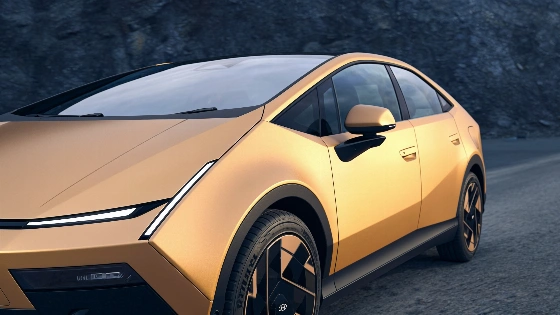
The Ioniq V is no simple facelift. Hyundai’s China Design Center built it from scratch. The car stretches 4.9 meters long, with a wedge-shaped, futuristic look and a drag coefficient of 0.23. It’s 1.89 meters wide, 1.47 meters high, and rides on a 2.90-meter wheelbase. That puts it right in the mid-to-large sedan class. Buyers get space and style in one package.
The Ioniq V is built on an advanced 800-volt architecture, enabling ultra-fast charging that is rare in this price segment.
Step inside and the tech stands out. A panoramic 27-inch 4K display runs across the dashboard, blending the infotainment and passenger screens. Power comes from a Qualcomm Snapdragon 8295 chip. Hyundai’s ‘CyberEye’ head-up display projects info onto the windshield. The digital cluster and HUD push the bar higher for in-car tech at this price.
The numbers tell the real story. The base Ioniq V costs 99,900 yuan—just over 13,100 euros. It uses a single electric motor and LFP batteries from CATL, with 53.5 kWh or 66.8 kWh options. Depending on the setup, range runs from 520 km to 650 km under China’s CLTC standard. Power output comes in two versions: 140 kW (190 hp) or 168 kW (228 hp). Even the top model, with the full 650 km range, is listed at 131,900 yuan (about 17,300 euros). That’s far below most European rivals. CarNewsChina and CnEVPost confirm these specs and Hyundai’s aggressive pricing for China.
Hyundai isn’t hiding its global ambitions. The company calls the Ioniq V a model with “global vocation.” That means the design—and maybe the car itself—could head to Europe, Asia, or North America. This echoes moves by other Asian brands. CarNewsChina reports the Ioniq V officially launched in China on September 29, 2026. Hyundai is betting big on its China-focused development.
The Ioniq V is a China-tailored model, developed specifically for the local market rather than as a simple regional adaptation. Multiple sources, including CnEVPost and CarNewsChina, confirm that Hyundai’s approach was to create a vehicle from the ground up for Chinese consumers, with the possibility of global expansion still under consideration.
But there’s a snag for Spain and Europe. Hyundai already sells the IONIQ 6 in Spain. That car is nearly the same size and sits higher in the lineup. The IONIQ 6 is still new to the market. If the Ioniq V arrives soon, it could eat into IONIQ 6 sales. For now, this overlap makes a quick European launch unlikely, even though the Ioniq V’s price and tech are tempting.
The Ioniq V’s weight starts at 1,808 kg. That’s lighter than many battery sedans of this size. It helps with efficiency. The bold design, advanced tech, and low price make the Ioniq V stand out in the global EV race. Still, rules and market realities may keep it out of Spain for now.
Launching such a disruptive car in China first is a clear bet. China is the world’s biggest EV market. Hyundai’s talk of a “global” Ioniq V shows the story isn’t finished. If the company can sort out its own lineup and clear regulatory hurdles, the Ioniq V could force European brands to rethink their approach. Right now, the Ioniq V is a warning shot. The next EV battle will be about price and ambition, not just tech.