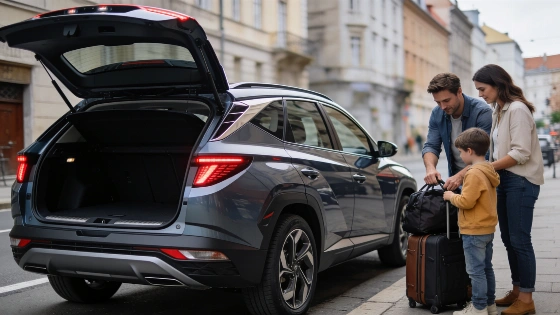
The 2027 Hyundai Tucson lands with up to 81 km of electric range, a huge 695-litre boot, and a striking new design. It’s built for families who want space, tech, and efficiency in one SUV.
Hyundai is shaking up the family SUV market with the 2027 Tucson. This isn’t a minor update. It’s a full overhaul. The new Tucson offers up to 81 kilometers of electric-only driving. The plug-in hybrid version puts out 292 CV. The boot holds 695 litres. These numbers put pressure on the competition.
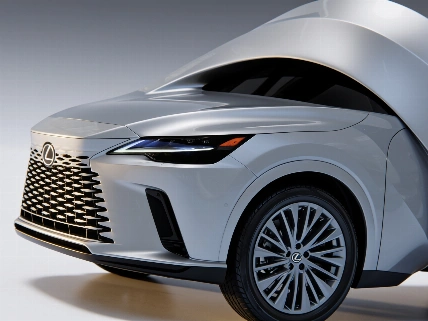
But it’s not just about stats. Hyundai’s design team took risks. They left behind the old look and went with the Art of Steel philosophy. The body now has sharper lines and bold wheel arches. Up front, the H-Edge lighting signature stands out. At the back, three-dimensional Prism taillights catch the eye. Some versions even get Micro Pixel Lighting with 25,600 LEDs. This Tucson looks nothing like the last one.
The official world premiere of the all-new 2027 Hyundai Tucson took place in New York on October 1, 2026, marking a major generational shift for the model.
Size is key for family SUVs. Hyundai made the Tucson bigger. It now measures 4.56 meters long and 1.9 meters wide. The wheelbase stretches to 2.72 meters. These changes aren’t just for show. Rear passengers get up to 1,002 millimeters of legroom. The rear doors open wide—up to 83 degrees. That makes it easier for families to get in or load big items.
The inside is a big step forward. The dashboard has two levels and uses soft-touch materials. Hyundai kept physical buttons for the main controls. No all-touchscreen gamble here. The digital instrument cluster is 9.9 inches. The central screen comes in 12.9 or a huge 17 inches, depending on the version. The Pleos Connect system runs on Android Automotive OS. It brings the Gleo AI voice assistant, real-time info, app support, and over-the-air updates. There’s a digital key for phones and smartwatches. The sound system is by Bang & Olufsen with 12 speakers. Ambient lighting, two 15W wireless charging pads, and four 100W USB-C ports are included. You can charge laptops on the go.
Practicality hasn’t been forgotten. The boot holds up to 695 litres, though this depends on the engine and setup. The rear bench splits 40:20:40 and slides up to 150 millimeters. Seats are built for comfort on long trips. Options include Ergo Motion seats with pneumatic support and massage, front seats with relaxation mode, and three-zone climate control. The Multi-Air Mode system spreads air through several vents. That means less direct blast and more comfort for everyone.
According to official Hyundai statements and coverage by leading automotive media, the new Tucson is built on a completely updated platform, with the long-wheelbase version measuring 4,700 mm in length, 1,905 mm in width, and 1,685 mm in height, and a wheelbase of 2,785 mm—making it significantly larger than its predecessor. This expansion is part of Hyundai's broader strategy to electrify and modernize its global SUV lineup.
There’s no diesel for Europe. Hyundai dropped it. The base engine is a 1.6 T-GDI petrol with 150 CV. Buyers can pick manual or dual-clutch automatic, plus a 48V mild hybrid system. Next up is a 245 CV hybrid (HEV) with a 1.49 kWh battery. It comes in front- or all-wheel drive. The top model is the plug-in hybrid (PHEV). It delivers 292 CV and 380 Nm of torque. The 17.1 kWh battery promises up to 81 kilometers of electric range on 17-inch wheels. That’s pending final certification. The PHEV has a 7.2 kW onboard charger for AC charging. Hyundai says the front-drive hybrid does 0–100 km/h in 8.3 seconds. The all-wheel-drive PHEV does it in 7.9 seconds. Official fuel and emissions numbers are still coming.
One clever feature is HEV Stay mode. It keeps the climate and audio running while the engine is off. That’s handy for quiet breaks or waiting without burning fuel. Hyundai wants hybrids to work better in real life.
Safety is a priority. The Tucson has seven airbags and a strong high-strength steel frame. The Hyundai SmartSense suite covers collision prevention, highway driving help, speed limit reading, driver and passenger monitoring, rear child alerts, and a surround-view camera for parking. Remote parking, low-speed collision avoidance, and trailer reverse assist are also on the list. Towing capacity is 1,910 kg for the hybrid and 1,810 kg for the PHEV, based on Hyundai’s data.
Production for Europe will happen at Hyundai’s Czech plant. Sales start in 2027. The price for Spain isn’t out yet. The full equipment list is also under wraps. Hyundai has confirmed a sportier Tucson will debut at the Paris Motor Show in October 2026. For now, all eyes are on how this new Tucson will compete with the Kia Sportage, Toyota RAV4, and Nissan Qashqai.
Hyundai has sold over two million Tucsons in Europe since 2004. That’s a big number. As reported earlier, this new version is built to keep that streak going.
Hyundai is betting on electrification, more space, and easy-to-use tech. No diesel. More electric range. More comfort and safety. That’s where the market is heading. The only thing missing is the Spanish price. That will decide if the Tucson’s promises turn into real sales. For now, Hyundai has raised the bar for family SUVs. Rivals have been warned.