Begur Worker Death Case: No Court Summons Two Years On. Two years after the death of Marc Ortega at a Begur beach club in Catalonia, no participants have been summoned to court. Family and friends accuse the system of inaction and are preparing protests.
Catalonia remains embroiled in a protracted dispute over the investigation into the death of 23-year-old Marc Ortega Cabaño, who drowned while working on the premises of Club Náutico de Sa Riera in Begur. Two years have passed since the tragedy, yet the court in La Bisbal d’Empordà has still not summoned any witnesses or suspects to testify. Relatives and friends of the deceased call this a case of judicial inaction and are demanding the proceedings be expedited.
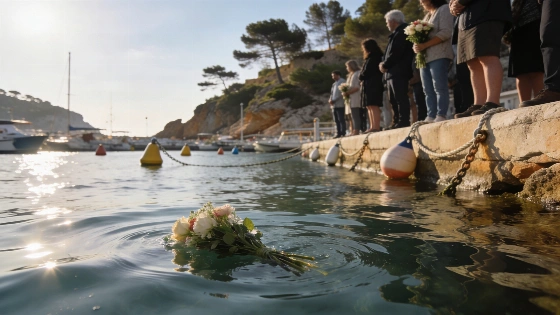
On the second anniversary of the tragedy, about twenty people gathered at the scene to pay tribute to Marc, throwing flowers into the sea. Family and friends express outrage that despite the seriousness of the case and conclusions from the Labor Inspectorate about violations, the investigation has hardly progressed. They announced plans to hold regular demonstrations outside the courthouse if the situation does not change. According to them, up to a hundred people are ready to join the protests.
According to case materials, Marc Ortega was performing hazardous work securing boats at depth, using a chain with tools as ballast. At some point, the chain on his belt got caught on an underwater structure, and his colleagues were unable to rescue him in time. The Labor Inspectorate found that the work was conducted without the necessary protective equipment and training, and the incident was classified as an industrial accident. An administrative process was initiated against the club, and a financial penalty was proposed.
Over two years of investigation, the court changed judges twice, but neither initiated interrogations of witnesses or suspects. The prosecution and the accusers regularly requested extensions of the investigation, citing the lack of key procedural actions, including court interrogations and expert examinations. At the same time, according to case materials, some club employees summoned for police questioning exercised their right to remain silent. The technical report on the incident is expected to be submitted to the court soon.
Authorities have also raised questions about the progress of the investigation: a month ago, the Catalonia Department of Labor officially requested information from the court on the case status and asked to be notified of any decisions. However, as participants in the proceedings note, not only is there no decision— the investigation itself is far from complete.
The CCOO union, which has monitored the situation from the beginning, announced it is prepared to file a complaint with the Labor Inspectorate if reports of serious violations by the club are confirmed. Depending on the outcome of the investigation, the union does not rule out filing a lawsuit against those responsible. The organization emphasizes that it will seek to improve working conditions and safety in professional diving to prevent similar tragedies in the future.
According to the case files, Marc Ortega had worked at the Club Náutico de Sa Riera for several years. In May 2024, a specialized company from Cadaqués was installing about 40 buoys in the bay, to which boats were moored. Although the club claimed that Ortega was only a “land-based” employee, at the time of the tragedy he was underwater performing tasks for which, according to the investigation, he did not have the necessary training or equipment. He had only been given a neoprene suit and a chain for diving, and he carried out his work while holding his breath.
On the day of the incident, Marc made several dives, securing ropes, until he ran out of parts. While his colleague went to get replacements, he heard cries for help and saw Ortega signaling for distress. Attempts to bring him to the surface were unsuccessful: the carabiner on the chain got caught on an underwater structure and, despite desperate efforts, he could not be saved.
The drawn-out investigation echoes other high-profile cases in which victims' families have faced bureaucratic hurdles. For example, in Seville, a court closed the case against a school after a student's death, raising concerns about the transparency and efficiency of judicial procedures — more details can be found in the report on the termination of the investigation after the tragedy at Irlandesas de Loreto.
For Catalonia and all of Spain, the issue of occupational safety on the water remains relevant: every year, the country records dozens of accidents involving employees of marine clubs and service companies. Legislation requires strict compliance with personnel training and equipment standards, but in practice, oversight is often formal. The incident in Begur once again raises the question of the need for real changes in the approach to investigating such tragedies and holding employers accountable.