Inditex reported a record €2.98 billion profit for the first half of 2026, but investors were cool on the news: shares in the world’s largest fashion retailer fell 3.6% within hours of the announcement. The results fell short of market expectations. Reuters cited higher operating costs, particularly increased transportation expenses tied to Middle East tensions, as a basic reason for the selloff.
Most companies would welcome a 6.8% rise in net profit and a 7.6% increase in sales. Inditex’s share price, but, fell to €54.48 after the September 9 results, with the drop topping 4% at one point. The market seemed unimpressed by the underlying numbers and the headline growth. The company reported record half-year revenue of €19.76 billion, while gross profit rose 8.3% to €11.6 billion.
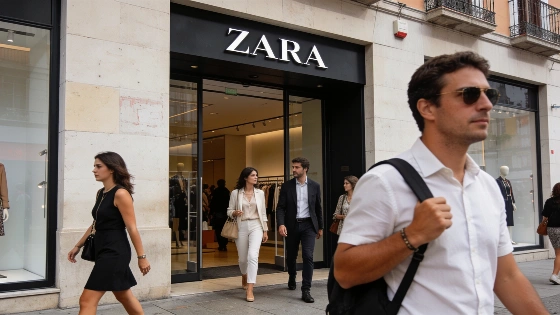
Inditex has been reducing its store count. By the end of July, the company operated 5,444 stores worldwide, down from 5,528 a year earlier. Zara closed 47 locations, bringing its total to 1,487 stores. Lefties was the only brand to expand, adding 13 outlets. The changes are part of a longer-term effort to consolidate and modernize the network, with a focus on larger, more profitable spaces. Sur in English described the approach as ongoing network improvement, prioritizing bigger, more efficient locations over simply adding stores.
Despite having fewer shops, Inditex’s half-year revenue climbed to €19.76 billion, with currency-adjusted growth of 9.2%. The company credits its revamped stores and strong online sales. Zara, Zara Home and Lefties together brought in €13.78 billion, up from €13.15 billion a year earlier. The company said its spring-summer collections were "very well received by customers" and that both in-store and digital channels performed well.
Analysts quoted by Cinco Días cited a lower-than-expected operating result and rising costs as reasons for the market’s cool response. EBITDA rose 7.8% to €5.51 billion, while EBIT was up 7.6% to €3.84 billion. Both figures fell short of the most optimistic forecasts. The gross margin edged up to 58.7% of sales, but investors were looking for bigger gains. Investing.com reported that operating expenses rose 8.3%, outpacing revenue growth and adding to investor disappointment.
Inditex is continuing to invest. The company said like-for-like sales from August 1 to September 7, 2026, grew by approximately 9% compared with the previous year. Separately, it reported that sales over the same period rose 9% year-on-year at constant exchange rates, helped by strong demand for autumn and winter collections. For the full year, management plans to invest €2.3 billion in regular capital spending, plus another €200 million to modernize corporate facilities. A dividend of €0.875 per share is set for November 2, rewarding shareholders for last year’s results.
Inditex’s approach centers on fewer, larger stores, a strong online presence and profitability over expansion. The group’s 2025 results showed a 15.6% profit margin on sales, with €6.22 billion in net income from €39.86 billion in revenue.