Spain’s Interior Minister rejects claims that Moroccan authorities orchestrated the mass entry of migrants into Ceuta. Marlaska insists cooperation remains strong, despite police reports suggesting otherwise. The crisis highlights deep divisions over border management.
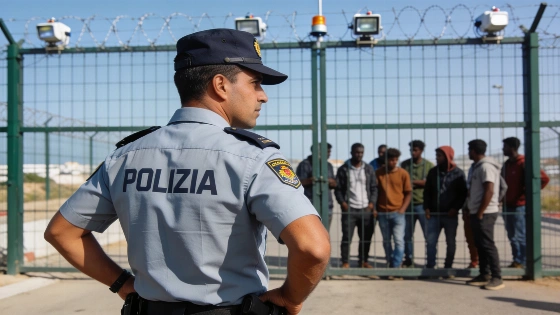
Spain’s Interior Minister, Fernando Grande-Marlaska, has firmly denied that Moroccan authorities were behind the sudden arrival of more than 70,000 migrants in Ceuta at the end of July. Despite police reports and internal briefings pointing to possible coordination on the Moroccan side, Marlaska insists that cooperation with Morocco is "excellent" and that no foreign government directed the border breach. The Spanish government, according to statements cited by El País, continues to stress the importance of working with Morocco to manage migration.
Pressure on the government has grown since the National Immigration and Borders Centre (CENIF) submitted a confidential report to the Audiencia Nacional. The report, based on police analysis of social media footage and field observations, describes a coordinated movement of people toward Ceuta and notes a permissive attitude among Moroccan security forces—some of whom were seen guiding groups to the border. However, the report does not directly accuse Rabat or call the operation criminal, instead noting that the scale and organization go beyond what is typical for known criminal networks in the area. Spanish authorities, as reported by Reuters, have said that any official accusation must be based on clear evidence.
In August, Spanish authorities reported a 30% increase in attempted crossings at the Ceuta border compared to the same period last year, highlighting ongoing migration pressures.
Grande-Marlaska, frustrated by the limited circulation of the police report, argued that such information is crucial for national security decisions. He said that neither he nor the national police director had seen the document beforehand, as the presiding judge had ordered officials to keep it confidential. This lack of transparency has caused tension within the government, especially since migration authorities and the Secretary of State for Security meet every Friday to discuss developments like these.
Despite the controversy, Marlaska points to Morocco’s acceptance of more than 4,000 returned migrants since August as evidence of ongoing cooperation. He says that after the July surge, no official meetings produced evidence that Moroccan gendarmes helped facilitate the crossings. Weekly coordination sessions, set up in 2018 to address spikes in Mediterranean migration, still bring together top officials from Extranjería, the Guardia Civil’s Maritime Service, and the Directorate of International Relations and Immigration. According to Marlaska, these meetings have not revealed any sign of foreign orchestration in the Ceuta incident. The Spanish Ministry of the Interior considers these bilateral mechanisms essential for responding quickly to migration crises.
Investigations are ongoing, and the minister has called for all images and data to be carefully reviewed before drawing conclusions. He says the government will only act when "certain facts" are established. For now, the official position is that there is no solid basis to accuse Morocco or any other state of planning the crisis.
According to data from the European Border and Coast Guard Agency (Frontex), the Western Mediterranean route, which includes Ceuta, has seen fluctuating migration numbers in recent years, with 2022 marking a notable decrease after previous record highs. However, experts warn that sudden surges, like the July incident, can quickly overwhelm local infrastructure and border resources.
Frontex
The fallout from the Ceuta events has reached beyond government. Local residents have staged protests, demanding urgent action and warning of neglect, as reported earlier. The city’s infrastructure and social services have been pushed to the limit, with thousands of arrivals in just two days sparking public anger and calls for accountability.
Spain’s border management with Morocco has long depended on a careful balance of diplomacy and vigilance. The current standoff shows how fragile that arrangement can be. While Marlaska continues to defend cooperation with Morocco, the existence of detailed police reports and the scale of the July incident raise questions about how the border is really managed. Until the government addresses these contradictions more openly, public trust in official statements is likely to remain uncertain.