Spain’s Interior Ministry is determined to cut the legal blood alcohol limit for drivers. The measure faces resistance in Congress but aims to reduce road deaths. The DGT and victims’ groups back the urgent change.
The Spanish government is making a renewed effort to lower the legal blood alcohol limit for drivers, with the Interior Ministry aiming to secure approval in Congress before the current legislative term ends. The proposal, led by Interior Minister Fernando Grande-Marlaska, seeks to reduce the maximum permitted level to 0.2 grams per litre of blood (0.1 grams per litre of breath), a significant drop from the current 0.5 grams (0.25 in breath). The move is designed to sharply cut road accidents and fatalities, a priority for the ministry and the Dirección General de Tráfico (DGT).
Despite the urgency, the measure has faced strong opposition in Parliament. The Socialist Group first introduced the proposal in September 2024, but it was rejected in the Interior Committee on March 18, with votes against from PP, Vox, ERC, and UPN. Critics cited procedural issues and argued the change was either disproportionate or motivated by revenue concerns. ERC demanded improvements to Catalonia’s road infrastructure and exam centers as conditions for support. Grande-Marlaska has repeatedly stressed the need for swift action, especially ahead of the summer period, when long journeys and local festivals increase the risk of alcohol and drug consumption among drivers.
The DGT, working closely with the Socialists, continues to seek consensus in a politically tense environment. Victims’ associations, including Stop Accidentes, have lobbied lawmakers, highlighting the urgent need for reform. Their disappointment after the March vote has only intensified calls for a new attempt before the legislature concludes. According to the DGT, the proposed limit is not set at absolute zero due to the potential for trace alcohol from certain medications and common foods like wine or beer.
Research from the University of Valencia’s Intras Institute indicates that lowering the limit to 0.2 grams could reduce the risk of traffic accidents by three to five times. Since 1950, alcohol-related driving deaths in Spain have claimed around 100,000 lives. A recent study by the National Institute of Toxicology and Forensic Sciences found that half of all drivers killed in 2025 had consumed alcohol, drugs, or psychotropic substances. The typical offender is a man aged 35 to 54, driving a car or motorcycle on a weekday.
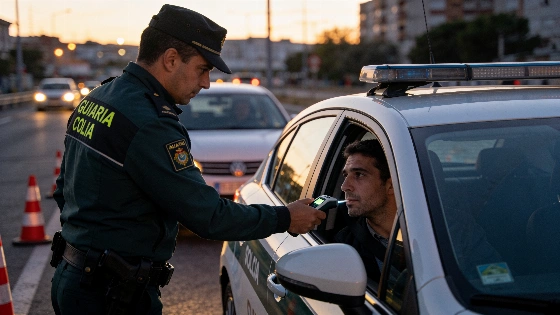
Alcohol and drugs are now the second leading cause of road accidents in Spain, responsible for 28% of incidents, just behind distractions such as mobile phone use, which account for 30%. In 2025, the Guardia Civil, regional, and local police conducted over nine million breath tests, with 135,000 drug tests performed by the Guardia Civil alone—65,000 of which were positive, according to DGT director Pere Navarro. The DGT also operates a national helpline (018) for road accident victims, offering support in over 50 languages daily from 8:00 to 21:00, as well as contact via WhatsApp and email.
The debate over stricter alcohol limits comes as Spain faces increased road traffic during holiday periods. For example, during the August holiday weekend, the DGT anticipated 5.6 million journeys and heightened controls to address accident risks, as detailed in recent coverage of summer travel surges. The push for a lower limit reflects ongoing concerns about road safety and the challenge of building political consensus for measures that could save lives.
Spain’s approach to drink-driving has evolved over decades, with gradual tightening of limits and increased enforcement. The current debate highlights the balance between public health, individual freedoms, and political negotiation. If the new proposal passes, it would bring Spain’s regulations closer to the strictest standards in Europe, reinforcing the country’s commitment to reducing preventable deaths on its roads.