A confidential police report linking Morocco to the Ceuta migration surge has triggered calls for top resignations. Both government allies and the opposition are demanding answers, putting the Interior Ministry under intense scrutiny.
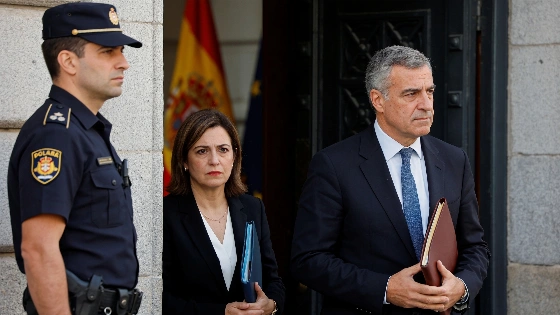
Spain’s political scene has been shaken by the leak of a police report that points to Morocco’s involvement in the mass entry of migrants into Ceuta. Izquierda Unida (IU) is demanding that either Interior Minister Fernando Grande-Marlaska or National Police chief Francisco Pardo Piqueras step down if the report’s findings are confirmed.
The controversy began after El Español published details from a confidential police document suggesting Moroccan authorities played a direct part in the late July surge of migrants at the Ceuta border. IU’s federal coordinator, Antonio Maíllo, said that if the police withheld information from the ministry, the director general should resign. If the ministry failed to act on the intelligence, he argued, the minister should be held responsible.
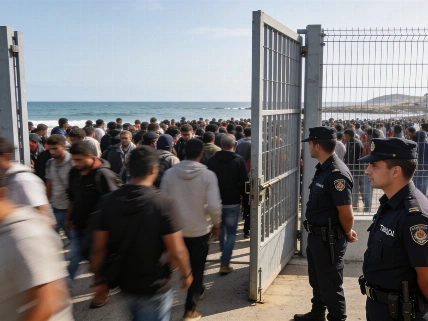
According to several Spanish media outlets, the estimated scale of the Ceuta incident reached around 72,000 people, a figure now widely cited by politicians and the press.
Sources at La Moncloa said they were surprised that such important evidence was not shared with government officials, raising concerns about communication failures that could affect national security. The Interior Minister responded by sending a late-night letter to the police chief, demanding an explanation for the information gap. By the next morning, the police director had already met with the officers who wrote the report.
Verónica Barbero, coordinator for Sumar, also called for transparency. She said that if the report is verified, Spain’s Foreign Ministry should summon Morocco’s ambassador for explanations. Barbero argued that denying Morocco’s involvement is becoming harder, and that any failure to inform the ministry must have consequences.
Meanwhile, the Partido Popular (PP) used the moment to step up criticism of Marlaska. Secretary General Miguel Tellado called the minister "shameless, incompetent, and a liar," while PP spokesperson in Congress, Ester Muñoz, accused the government of ignoring the police report and failing to act in Ceuta. The PP’s campaign against the government’s handling of the border crisis has intensified, including recent mobilizations and legal actions.
According to official sources cited in the Spanish press, the Interior Ministry only learned of the existence of the police document through media reports, not via internal channels. This has intensified scrutiny of communication between the police, the ministry, and the National Security Council, raising questions about the effectiveness of Spain's internal information flow.
Within the government, Culture Minister Ernest Urtasun urged caution but said Morocco’s involvement seems likely, describing the incident as a "hybrid attack" using migration to destabilize Spain’s coalition. Castilla-La Mancha’s president, Emiliano García-Page, a vocal Socialist critic, said that if the report is accurate, there must be consequences "at every level." He also questioned why it took a judge’s request to prompt the police report, rather than action from intelligence or law enforcement agencies.
Antonio Maíllo argued that such a large movement of people—up to 80,000 approaching the Ceuta border—could not have happened without the Moroccan government’s knowledge and coordination. He warned that if parts of Spain’s security forces acted independently or withheld information, it would be a serious breach of loyalty to the government.
The Ceuta crisis has exposed deep problems in Spain’s security chain of command and raised political risks around managing cross-border migration. The government’s credibility is now under pressure, both in its relationship with Morocco and in its ability to control its own institutions. The calls for resignations reflect wider concerns about the integrity of Spain’s security services and the transparency of its political leadership. If the report’s findings are confirmed, the consequences could reach far beyond Ceuta, forcing changes at the highest levels of government and law enforcement.