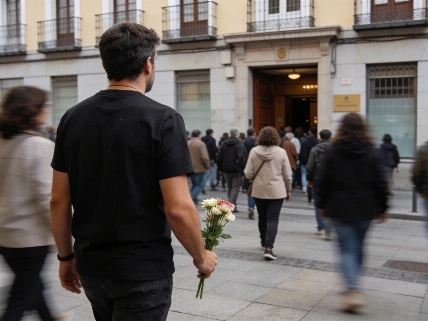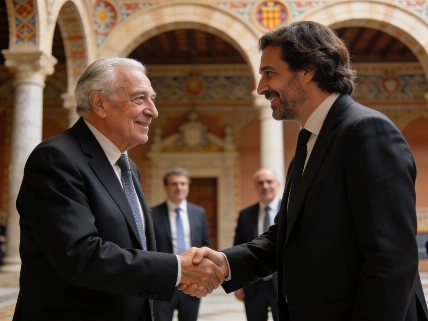
Jordi Borja, a central figure in Barcelona’s urban transformation and democratic politics, has died at 85. His work shaped city planning and public debate. His legacy extends far beyond architecture, influencing generations.
Jordi Borja, one of the most influential urban planners and political activists in Barcelona’s recent history, has died at the age of 85. His passing marks the end of a career that left a deep imprint on the city’s development and on urban policy debates across Spain and Latin America. Borja’s approach combined political activism, academic rigor, and a commitment to citizen participation, making him a reference point for those seeking to rethink the role of cities in democratic societies.
Emerging as a key figure during Spain’s transition to democracy in the 1970s, Borja was instrumental in redefining Barcelona’s urban landscape. At a time when the city faced industrial decline and social fragmentation, he advocated for a new vision that went beyond physical reconstruction. In 1972, he founded the Centre d’Estudis Urbanístics, Municipals i Territorials (CEUMT), which became a hub for progressive urban policy and laid the groundwork for the left-wing municipal movement that gained momentum after the first democratic local elections in 1979.
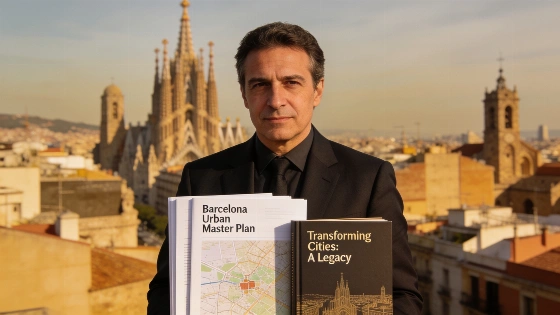
Borja’s entry into the Barcelona City Council as a PSUC representative allowed him to put his ideas into practice. Working alongside Pasqual Maragall, he played a central role in implementing the Plan General Metropolitano, a strategic tool that brought order to Barcelona’s chaotic growth and reclaimed public spaces for residents. His influence extended well beyond daily administration, shaping the city’s long-term structure and priorities.
His theoretical contributions have resonated internationally, especially in Latin American cities such as Bogotá, Medellín, Buenos Aires, Quito, Ciudad de México, and Montevideo. Borja’s books, including La ciudad conquistada and Luces y sombras del urbanismo de Barcelona, are considered essential reading for understanding contemporary urbanism. He consistently argued that public space is not just infrastructure, but the foundation of citizenship and democracy—a place where diversity is visible and social conflicts are negotiated.
Throughout his career, Borja remained deeply engaged in Barcelona’s ongoing debates about identity, urban form, and the city’s future. In recent years, as president of the Observatori DESC, he supported campaigns against unchecked tourism, real estate speculation, and evictions—issues that contributed to Ada Colau’s rise to the mayoralty. His interventions were never nostalgic; instead, they reflected a belief that cities can be made more just and livable through collective action and policy innovation.
Borja’s work often explored the tension between the built city (“la ville”) and the lived city (“la cité”), a theme also examined by Richard Sennett in Construir y habitar. He sought a balance between rational urban planning and the everyday experiences of residents, advocating for an urbanism that is both structured and adaptable. This pursuit of synthesis defined his legacy as both a thinker and a practitioner.
His death comes at a time when Barcelona continues to grapple with the challenges of urban transformation. The city’s recent experiences with infrastructure issues, such as the evacuation of buildings after a major sinkhole in the Putxet district, highlight the ongoing need for thoughtful urban policy and citizen engagement. For example, the response to that incident, as detailed in coverage of the Putxet sinkhole evacuation, underscores the importance of resilient planning—an area where Borja’s influence remains relevant.
Jordi Borja’s legacy is not limited to his published works or political roles. He is remembered as a committed intellectual who translated ideas into tangible change, always emphasizing the power of citizens to shape their own environment. His life serves as a reminder that cities are built not only with bricks and concrete, but with vision, courage, and unwavering faith in democratic participation.
Contextually, Borja’s impact is evident in the way Barcelona is studied and discussed internationally. The city’s transformation from an industrial hub to a model of urban regeneration is frequently cited in academic and policy circles. His advocacy for public space and social inclusion has influenced urban agendas far beyond Spain. As cities worldwide face pressures from tourism, housing crises, and social inequality, Borja’s principles continue to inform debates about how urban environments can support democracy and community life.