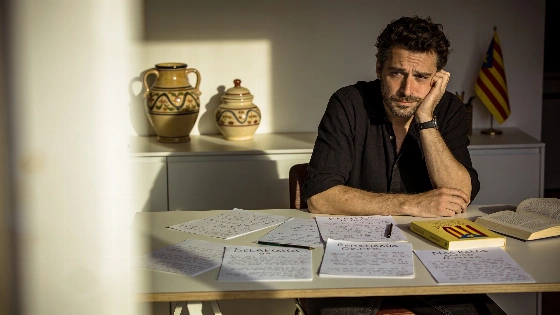
Juana Dolores warns she may stop creating in Catalan after facing criticism. The artist cites ongoing attacks and controversy over her recent statements. The debate highlights tensions around language and identity in Catalonia.
Artist and writer Juana Dolores has publicly stated she is considering ending her creative work in Catalan, citing sustained criticism and personal attacks following her recent remarks on language, class, and identity. The announcement came through a video posted on her Instagram account, where she explained that the majority of her work is in Catalan but that the current climate has made her question whether to continue.
Dolores, who was born in El Prat de Llobregat, has become a focal point of debate after comments made during the opening of her exhibition, “Juana Dolores Romero Casanova, la exposición que ha comisariado en La Virreina.” In a televised interview with 3Cat, she described “hate” as a tool for revolution and referenced her participation in the October 2019 unrest in Barcelona’s Urquinaona square. She argued that the events were driven by class resentment as much as by the independence movement, challenging established narratives about the protests.
Her statements triggered a wave of criticism, particularly from Catalan independence supporters. In her video, Dolores said she has faced years of online harassment and accused some nationalist groups of exploiting her words for their own agendas. She also rejected claims that she had labeled Catalan as a language of the bourgeoisie, insisting that cultural achievements in Catalonia are the result of organized working-class efforts, especially among Spanish-speaking migrants.
Dolores defended the importance of linguistic immersion in public schools, highlighting that these policies were championed by working-class families, many of whom migrated from other parts of Spain. She expressed frustration at being targeted by activists and organizations that, in her view, misrepresent her positions and blame migration for the challenges facing the Catalan language.
Amid the controversy, Dolores emphasized the precariousness of her position as an artist, noting that her work is niche and rarely reaches a mass audience. She called for greater support and understanding, warning that without it, she may be forced to abandon Catalan as her primary language of creation. Her exhibition “Declaración de amor a Lenin” at La Virreina, open until November, explores the revolutionary and dissident potential of love as a political category, challenging its traditional association with bourgeois sentimentality.
The debate around Dolores’s statements comes at a time of heightened sensitivity over language and identity in Catalonia. Recent reports have highlighted broader social and economic pressures in the region, including issues in the public sector. For example, a recent analysis of Catalonia’s social services sector pointed to underfunding and low wages as factors contributing to wider tensions. These developments underscore the complex interplay between language, class, and cultural policy in contemporary Catalonia.
Juana Dolores, now 34, has just launched her first major museum exhibition. Her case illustrates the challenges faced by artists working in minority languages and the broader debates over cultural identity in Spain. The situation also reflects ongoing disputes over the role of migration, public education, and the future of Catalan as a living language. As the discussion continues, the outcome may influence not only Dolores’s career but also the wider cultural landscape in Catalonia.