The Tauste case judge will summon new witnesses after initial testimonies failed to clarify the double homicide. With crucial evidence still missing and the main suspects silent, the investigation is set to stretch into 2027 or beyond.
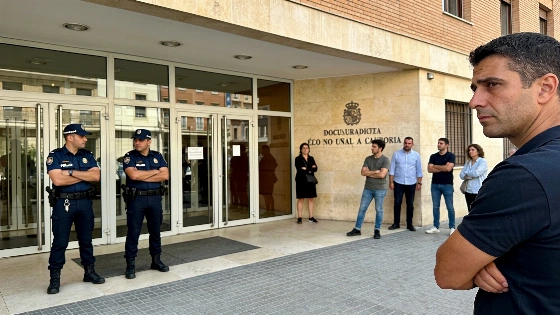
Javier Sánchez and Esther Latorre were killed over a month ago. The case has only grown more tangled since. The judge in charge, frustrated by the first round of witness statements, is now calling in more people. He wants answers. On September 25, the Ejea de los Caballeros court questioned new witnesses. Among them: the victims' brother-in-law and nephew. The investigation is widening.
So far, the court has heard from neighbors, friends, the detained man's lover, a former landlord, and Carlota's relatives. Still, the full story is missing. Olga, Carlota's younger sister, has not testified yet. She lives in Dublin. Her statement is delayed. The process is tightly sealed to protect the family, but EL ESPAÑOL reports the witness list will keep growing. One detail stands out. Luis Carlos's former lover told the court he asked her for a fake alibi. She also said he confessed to killing two people.
The Guardia Civil is now investigating a hypothesis that Carlota may have attempted to harm her parents a week before the double homicide, based on forensic and material evidence.
Some key evidence is still missing. Investigators have not found the kitchen knife believed to be the murder weapon. The suspects' clothes from the night of the crime are also gone. Police are searching for Carlota’s shirt, Luis Carlos’s white polo, and his jeans. Only Luis Carlos seems to have changed his whole outfit after the attack. Carlota came home in almost the same clothes. Investigators think this could mean she planned the crime, with Luis Carlos carrying it out. Heraldo de Aragón and other sources confirm that forensic work and crime scene evidence are still central to the case.
Security cameras tracked both suspects at several spots: Delicias station in Zaragoza, Tauste, and Gallur. They moved on foot, trying to get back to Zaragoza fast. Carlota changed her shirt—both were white, but with different patterns. Luis Carlos switched to a blue shirt and dark shorts. Both wore black caps on the way back. They likely wanted to avoid being recognized.
Inside Zuera prison, Carlota and Luis Carlos have not spoken. Their silence is total. Two big questions remain: what exactly happened, and who planned it? Defense strategies are just starting to take shape. Carlota’s lawyer is Juan Manuel Martín Calvente. Luis Carlos is represented by Sergio Piracés. The judge suspects Carlota led the plan. Luis Carlos, described by his lawyer as easily influenced, first confessed to two friends and the forensic doctor. Later, he stopped talking.
Both Carlota and Luis Carlos remain in pre-trial detention at Zuera prison, and the charges could be reclassified as aggravated homicide, which carries sentences of up to 25 years per victim. The Spanish press notes that, due to the ongoing collection of testimonies, the trial may not begin until late 2027 or even early 2028.
Right now, both face homicide charges. But if evidence shows planning and intent, those charges could become aggravated homicide. That means up to 25 years in prison for each victim. The trial is not expected before late 2027 or even 2028. This case will not move quickly.
Carlota is about 19 weeks pregnant. She and Luis Carlos are still in Zuera prison. There are no plans to move her, given her health and mental state. The slow pace of the investigation shows how hard it is to prosecute violent crimes when motive and evidence are unclear.
The brutality of the Tauste case is hard to ignore. Esther Latorre suffered more than thirty stab wounds. The suspects allegedly used a mop to clean up after themselves. There is little physical evidence. The suspects refuse to talk. Investigators are left with more questions than answers. This is not the first time Spanish authorities have faced such uncertainty, as seen in other high-profile cases.
The judge’s move to call more witnesses is a push to break the silence and find missing evidence. Every detail matters here. The slow, careful approach is not just routine. It is the only way forward. The Tauste case, with its unanswered questions and slow progress, shows the limits of the Spanish justice system when faced with planned violence and erased clues. Until the missing evidence turns up and the suspects talk, the truth will stay hidden.