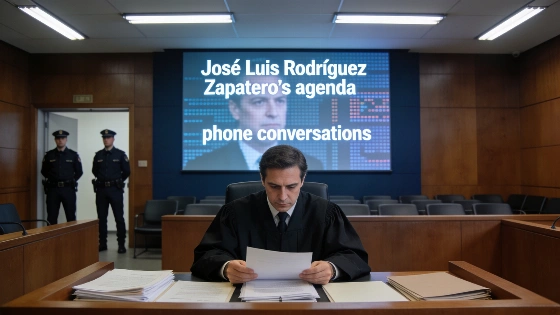
Spain's National Court has launched an inquiry into leaks from the Plus Ultra case. The move follows the publication of José Luis Rodríguez Zapatero's agendas and private conversations. The court seeks to identify those responsible.
The National Court has initiated a formal investigation into the unauthorized disclosure of confidential materials from the Plus Ultra case, which currently implicates former Prime Minister José Luis Rodríguez Zapatero. Judge José Luis Calama, who oversees the proceedings, has instructed authorities to determine the source of the leaks and assess whether criminal charges may be warranted. This decision comes in direct response to the recent public release of Zapatero's detailed agendas and private exchanges with his secretary, a development that has intensified scrutiny around the case.
According to the court's order, the gravity of the leaks and their potential classification as criminal offenses—specifically, the revelation of information from proceedings declared confidential—necessitated immediate action. The judge emphasized the need to identify those responsible, underlining the seriousness with which the court views breaches of judicial secrecy. The publication of sensitive materials, including personal schedules and internal communications, has raised concerns about the protection of privacy and the integrity of ongoing legal processes.
The Plus Ultra case has already drawn significant public and political attention, with Zapatero remaining under formal investigation. The latest leaks have added a new layer of complexity, prompting the judiciary to reinforce measures aimed at safeguarding confidential information. The court's swift response signals a broader effort to address the risks posed by unauthorized disclosures in high-profile legal matters.
This episode echoes previous controversies involving prominent political figures and judicial proceedings in Spain. For instance, recent tensions within the PSOE leadership and the handling of corruption verdicts have also sparked debate, as highlighted in a recent report on political fallout following a major corruption sentence. Such incidents underscore the ongoing challenges faced by Spanish institutions in balancing transparency, privacy, and the rule of law.
In Spain, the unauthorized release of information from judicial investigations is considered a serious offense, with penalties that can include fines and imprisonment. The Audiencia Nacional (National Court) frequently handles cases involving political figures and sensitive matters of public interest, making the protection of confidential proceedings a recurring concern. The outcome of the current inquiry may set important precedents for how similar breaches are addressed in the future, especially as digital communication increases the risk of leaks. The case also highlights the heightened scrutiny faced by former and current officials when legal and political interests intersect.