Judge María Tardón has ordered Ceuta to submit its call records. The request covers contacts with Pedro Sánchez and La Moncloa during the border crisis.
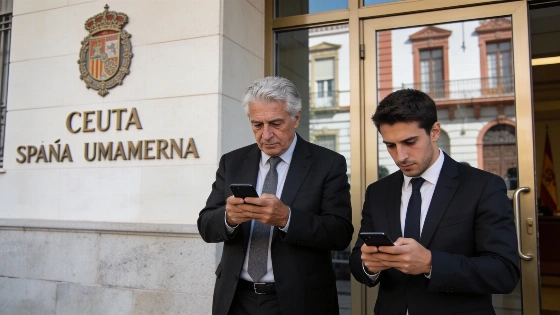
The court wants the full call list for 27 to 30 July 2026, covering contacts between Ceuta President Juan Jesús Vivas, Pedro Sánchez and the prime minister's chief of staff. The records could show how often Vivas sought help before the mass arrival began.
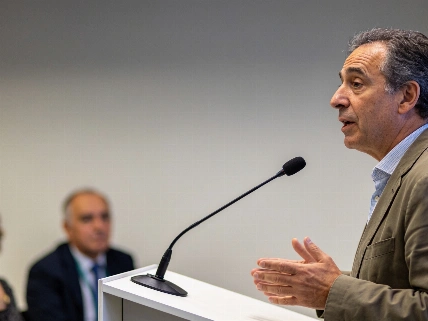
Judge María Tardón issued the order after Vivas appeared as a witness on 30 September. Ceuta is taking part in the case as an injured party. Vivas told the court that he repeatedly contacted La Moncloa and the ministries responsible for Interior, Territorial Policy and Foreign Affairs.
His lawyers must now submit the records urgently. The judge wants to compare Vivas's testimony with documented communications data.
The dispute is narrow but impressive. Vivas said he made around 10 attempts to reach Sánchez. The prime minister's chief of staff responded to three communications. Vivas said those exchanges indicated that the relevant ministries were handling the issue. He was also told that the proper channel would eventually be the Government Delegation, not the Prime Minister's Office.
Vivas first said his efforts had gone no further than the chief of staff. He later said he had also contacted officials in several ministries. On 30 July, after speaking with the prime minister's chief of staff and Secretary of State for Security Aina Calvo, he said he spoke directly with Pedro Sánchez.
La Moncloa gave a different account the day after his testimony. The Government said its office exchanged nine communications with Vivas's cabinet between 27 and 30 July. Each was answered immediately or within minutes.
RTVE reported the official version, saying the 10 allegedly failed attempts amounted in practice to one call made on 27 July at 20:58. Vivas's own team did not follow up that call.
The chronology given by Vivas starts at 8:39 on Monday 27 July. Pablo García, who headed Vivas's cabinet, spoke with Diego Rubio, who headed Sánchez's cabinet. Vivas said the call lasted six minutes and conveyed that the migration situation was worsening.
Publicly reported call data also records a contact at 13:07 that day, lasting three minutes. Another conversation took place at 11:17 on 30 July and lasted about one minute.
The two sides also disagree about what happened on 30 July. Vivas said that around midday, the prime minister's chief of staff told him the migration issue was already being handled properly and that there was no need to speak with Sánchez.
Sánchez called about an hour later, Vivas said. The Ceuta president said every call was registered and could be checked.
The court order does not decide which account is correct. It requires Ceuta's legal representatives to provide the call list urgently. Judge Tardón specifically requested calls between Vivas and Sánchez or the prime minister's chief of staff from 27 to 30 July 2026.
The request comes amid wider judicial scrutiny of politically sensitive cases. A separate Madrid case involving Begoña Gómez was examined in earlier court coverage. The Ceuta investigation asks a different question: whether the warnings issued during those four days reached the level of government described by Vivas.
Separate reports place the investigation in the context of events on 30 and 31 July. The situation at the El Tarajal border crossing is part of that account.
The disagreement goes beyond the number of calls. Vivas described repeated efforts and contacts with several ministries, saying three communications received substantive responses. La Moncloa counted nine answered exchanges and reduced the alleged failure to one unanswered call.
The records could settle some of that dispute. They can show the timing of calls between the Ceuta presidency and the central government during the days around the arrival of 80,000 people, as well as which officials took part.
They cannot prove what the callers said. The public record still contains two incompatible versions from Vivas and La Moncloa. The documents requested by the court will shape the final assessment.