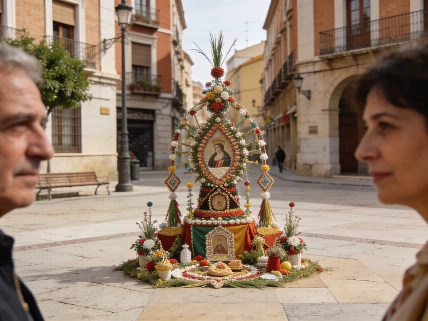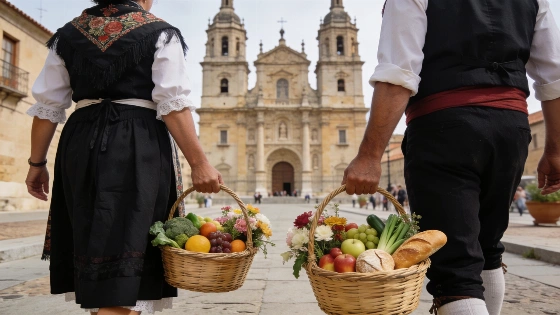
On 31 July, residents in traditional manchego dress walk through Ciudad Real towards the Cathedral carrying produce and flowers for the Virgen del Prado. That procession is one of La Pandorga’s defining moments. On 16 November 2026, Spain’s Ministry of Industry and Tourism, through the Secretary of State for Tourism, declared it a Fiesta de Interés Turístico Nacional.
The declaration followed an application by Ciudad Real City Council and a favourable report from the Castilla-La Mancha regional government. Mayor Francisco Cañizares announced the recognition on 13 November after receiving confirmation from government subdelegate David Broceño. The ministry’s publication three days later made the status official. Cañizares described it as “La Pandorga, el logro colectivo de una ciudad.”
The Ministry’s announcement cites the celebration’s long history and distinctive character. It also recognises its deep roots among local residents and its contribution to promoting Castilla-La Mancha’s traditions and cultural heritage. La Pandorga is the 18th celebration in the region to receive the national designation, bringing Spain’s total to 171. The Castilla-La Mancha government called the decision a milestone for Ciudad Real’s cultural identity.
The festival takes place each year on 30 and 31 July in honour of the Virgen del Prado, Ciudad Real’s patron. Its origins are linked to agricultural customs and farmers’ offerings of thanks for the harvest. Historical references to the celebration date back to the 16th century. La Pandorga was previously classified as a Fiesta de Interés Turístico Regional on 3 December 1985.
Seguidillas and other manchego music and dances feature prominently. Traditional dress is another marker. Peñas and associations take part, as do folk groups. At the centre of the religious programme, participants offer produce and flowers at the Cathedral, reflecting the festival’s blend of devotion and agricultural heritage.
The proclamation of the Pandorgo on 31 July is a central event. The figure represents the spirit of the festival and manchego customs, and joins the Dulcinea in key ceremonies, including the offering to the Virgen del Prado. Fruit, vegetables, bread and flowers are placed before the patron at the Cathedral.
The programme also features the traditional “limoná” contest and musical performances. Cultural activities are part of the celebrations, while the public invitation to “limoná y torraos” remains a characteristic custom. On 16 November 2026, Pandorgo Antonio Martín Císcar and Dulcinea 2026 Andrea León Zapata joined a public celebration in the Jardines del Prado, where participants toasted with limoná.
Other symbols include the pañuelo de yerbas and the hymn “Mi pueblo cantará: Pandorga”, composed by Javier Segovia in 1973. Regional authorities say the festival has preserved its roots and passed them from generation to generation.
The Provincial Council of Ciudad Real welcomed the designation as a milestone for the city and the wider province. Its fourth vice-president, Adrián Fernández Herguido, said residents of provincial municipalities also regard the 31 July celebration as their own and called the recognition a historic milestone. The council says national status will strengthen the festival’s role in promoting Ciudad Real and its traditions.
The Ministry says national status will support Ciudad Real’s tourist profile and help diversify its visitor offer while promoting local heritage. The next celebration under the designation will take place on 30 and 31 July 2027. Regional tourism promotion has also featured in coverage of Segovia at Intur, which reported live cooking demonstrations alongside displays of local traditions.