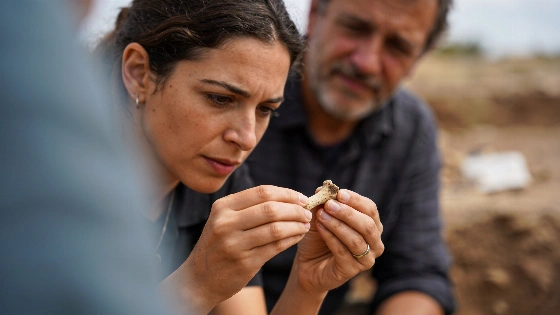
At Atapuerca, the remains of a child known as Benjamina suggest she lived to about 12 with a skull condition that would now be treated soon after birth. Researchers concluded that her survival may have depended on care from her wider group, beyond what her parents could provide.
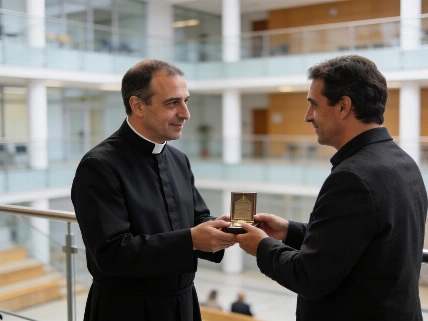
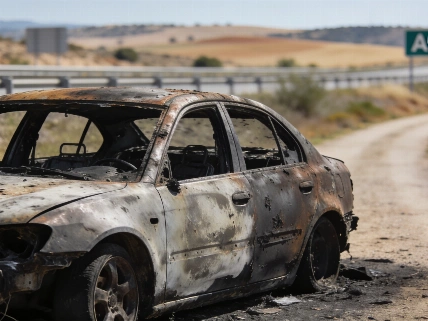
Benjamina’s story opens Memoria de las manos. Cómo los vínculos, los afectos y los cuidados nos hicieron humanos, the new essay by journalist and writer Virginia Mendoza. Published by Debate on 29 October 2026, it draws on research in archaeology and palaeontology, while also bringing in neuroscience to examine how cooperation shaped human survival. In an interview with SINC, Mendoza said her first presentation took place in Terrinches, where she lived until the age of 12, after other events were cancelled following the Urda train accident. She had nearly travelled on the train involved.
The argument grew out of her previous book, La sed. Mendoza describes societies that faced extreme drought and says those marked by deep social division were more vulnerable to collapse. She points to the interconnected Bronze Age motillas of La Mancha: during a megadrought lasting nearly 900 years, she says, communities found ways to remain connected. The fortified wells gave their controllers power over water, yet the settlements were linked. University of Granada researchers describe the motillas as strategically located habitation centres associated with local resources, crossings and communication routes. Their territorial analysis places the sites in a passage between the Meseta and Andalucía, and between Levante and the south, considering hydrology, climate and flooding alongside settlement geography.
For evidence of care across generations, Mendoza discusses the “grandmother hypothesis”, developed by anthropologist Kristen Hawkes and colleagues through research among the Hadza in northern Tanzania. Older women returning from the fields brought food for their grandchildren, allowing mothers to focus on nursing babies; the women provided up to half the food for older children, according to Mendoza’s account. In a 1997 study, Hawkes worked with James O’Connell and Nicholas Blurton Jones to examine how women allocated their time and provided for offspring, alongside children’s nutritional welfare; their findings were described as consistent with the hypothesis. The researchers concluded that women who cared for more grandchildren lived longer. This work formed part of a broader Hadza research programme that also examined hunting income and food sharing: a 1991 study considered large-game hunting and common consumption, defining big game as prey with a mean adult mass of at least 40 kilograms.
She also points to everyday forms of physical connection. Studies she cites have found that people’s steps can synchronise when they walk together, with handholding making that more likely. Mendoza says holding hands can also reduce activity in the brain’s hypothalamus, which responds to stress. She links social conversation to group cohesion, drawing on Robin Dunbar’s comparison between human gossip and the time other primates spend grooming one another.
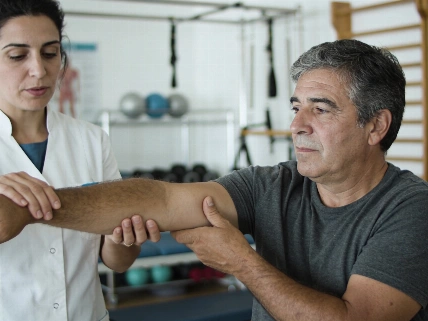
The book’s argument about care has a contemporary counterpart in organised support. A separate report covered ASEM’s rehabilitation appeal for people with neuromuscular diseases. Mendoza also warns that people who feel unable to confide in friends may turn to artificial intelligence chatbots, which she says are designed to agree with users.
Mendoza’s previous book, La sed, has been translated into English and German. It is also available in Italian. Portuguese and Dutch translations have been published as well. Memoria de las manos. Cómo los vínculos, los afectos y los cuidados nos hicieron humanos is available in bookshops, online and as an e-book.