Barcelona’s Liceu opens its season with ‘Le Nozze di Figaro’ staged as a giant wedding cake. Marta Pazos directs, turning the cast into living dessert ingredients. The production runs for 13 performances.
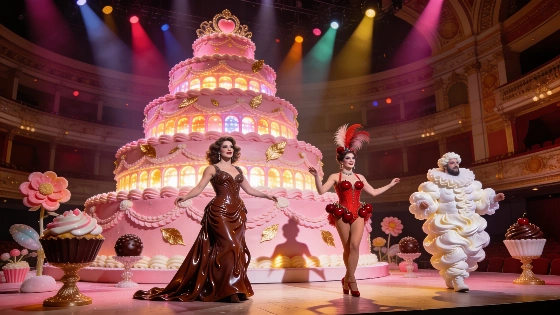
The Gran Teatre del Liceu in Barcelona has launched its new season with an unconventional staging of ‘Le Nozze di Figaro’, transforming the stage into a massive wedding cake and dressing the cast as ingredients from a dessert recipe. Under the direction of Marta Pazos, the production opened this Friday and will run for 13 performances until the 21st, with an additional preview for audiences under 35. The creative approach places the characters in costumes resembling chocolate bars, cherries, honey, and other sweet elements, turning the classic Mozart opera into a visual spectacle that challenges traditional expectations.
Pazos, who previously collaborated with composer Raquel García-Tomás on ‘Alexina B.’ at the Liceu, was invited by the theatre’s management to take on this new project immediately after that premiere. She describes the wedding cake set as both an installation and a metaphor for the social hierarchy depicted in the opera. The cake, adorned with pink icing and cupids, serves as the backdrop for a story that, while comedic on the surface, addresses serious themes such as the abuse of power and the right of the nobility over their servants.
The cast is led by André Schuen and Adriana González as the Count and Countess Almaviva, with Luca Pisaroni as Figaro and Sara Blanch as Susanna. Víctor García de Gomar, the Liceu’s artistic director, highlighted the opera’s relevance as a critique of the arrogance of the ruling class on the eve of the French Revolution. The production, conducted by Giovanni Antonini, emphasizes the contrast between the male and female worlds within the narrative, with the latter often subjected to abuse.
‘Le Nozze di Figaro’, first performed in Vienna in 1786 and based on a play by Pierre–Augustin Beaumarchais, tells the story of a nobleman’s attempt to exercise his right over his servant on her wedding day, and the ensuing schemes to thwart him. The libretto by Lorenzo da Ponte sets the action in a single day at a palace in Seville, using comedy to expose the injustices of the aristocracy. Pazos’s staging uses humor and surprise to navigate these themes, with each scene offering unexpected visual twists. The cast, including Sara Blanch, noted the lighthearted atmosphere during rehearsals, with performers dressed as cream, sugar, and yeast, creating a sense of camaraderie and laughter.
Conductor Giovanni Antonini described the opera as both highly theatrical and strikingly modern, with Mozart’s score allowing for innovation within a formal structure. Adriana González, who has performed in seven productions of this opera, emphasized how each staging brings new interpretations, influenced by costumes, direction, and the ensemble. Luca Pisaroni, portraying Figaro, spoke about the challenge of balancing humor with moments of melancholy, a dynamic that he sees as central to the work’s enduring appeal.
This bold reinterpretation at the Liceu follows a trend of innovative performances in Barcelona’s cultural scene. Earlier this year, the city also hosted a major concert by Alejandro Sanz, which drew significant attention for its unique atmosphere and audience engagement, as highlighted in a recent report on the large-scale RCDE Stadium event. Such events underline Barcelona’s ongoing commitment to reimagining classic works and attracting diverse audiences to its major venues.
‘Le Nozze di Figaro’ remains one of Mozart’s most performed operas worldwide, known for its intricate plot and social commentary. The Liceu’s decision to stage it as a vibrant, edible fantasy not only refreshes the visual language of opera but also invites new conversations about tradition, power, and the role of humor in confronting difficult subjects. The production is expected to draw both opera enthusiasts and newcomers, reinforcing the Liceu’s position as a leading institution in Spain’s performing arts landscape.