Storms with lightning set off a series of wildfires in Valencia and Alicante. Most fires were small and quickly put out, but emergency teams responded to dozens of calls as weather alerts remain active.
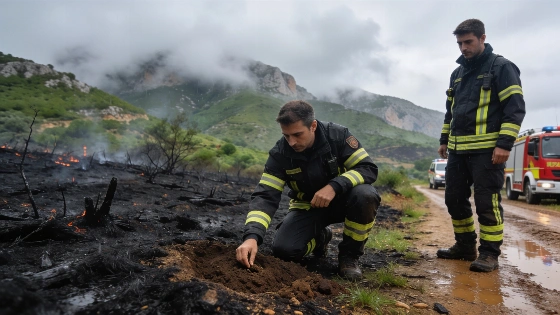
Firefighters in Valencia and Alicante spent much of the day responding to wildfire alerts after thunderstorms brought lightning strikes to the region. Most of the fires broke out in mountain areas and were quickly contained, but the number of incidents showed how exposed rural zones are during storm season.
By midday, the Consorcio de Bomberos de Valencia had already responded to four separate reports of fires likely started by lightning. In Requena, a blaze burned 25 square meters—about 0.0025 hectares—before crews put it out. Another small fire in Carcaixent was also handled quickly, with little damage.
In the days leading up to these incidents, a major wildfire in Polop (Alicante) forced the evacuation of about twenty people and the closure of two regional roads.
Not every call turned out to be a real fire. In Chiva and Ròtova, reports of smoke led to emergency responses, but crews found no active flames after checking the area. In Alicante province, nearly ten fires started almost at once, all traced to lightning in mountain zones like Lliber and Penáguila. In several cases, rain from the same storms helped put out the fires before firefighters arrived.
Some incidents required a larger response. Teams from the Consorcio Provincial de Bomberos de Alicante, along with aerial units and Generalitat forest firefighters, were sent to Xixona and Castalla. When they arrived, there were no active fires, so they stood down. Throughout the afternoon, the Valencia fire brigade handled up to 36 incidents linked to the ongoing rain and wind.
Weather warnings are still in effect, with orange and yellow alerts for storms and heavy rain active until 23:59 on Wednesday. For the Valencia coastline and the northern coast of Alicante, the alert lasts until 6:00 on Thursday, September 10. These warnings reflect how quickly Mediterranean weather can turn, with a single storm front triggering dozens of emergencies in just a few hours.
According to official European statistics, the summer of 2026 saw around 540,000 hectares burned across the EU, with Spain experiencing an especially severe wildfire season. This broader context underscores the heightened risk and pressure on emergency services during extreme weather events.
Recent events follow a pattern seen elsewhere in Spain, where sudden rain and lightning have complicated wildfire control. As reported earlier, overnight rain in Santa María de la Alameda recently helped slow a major fire, showing how storms can both start and stop wildfires.
Spain’s emergency services have become skilled at rapid response, but the steady rise in lightning-caused fires puts extra strain on crews. The recent wave of incidents in Valencia and Alicante shows that while most fires stay small, the overall workload is heavy. With weather alerts now common in late summer, authorities must balance quick action with longer-term plans to reduce fire risk. As climate swings become more extreme, the line between a routine storm and a regional emergency keeps getting thinner, forcing both officials and residents to stay alert and adapt.