Luxeed is about to shake up China’s electric SUV market with the RX, a five-meter coupe-SUV launching September 28. With top-tier sensors, a 21,000 rpm motor, and a lower entry price thanks to a new battery, the RX is set to challenge the big names and raise the bar.
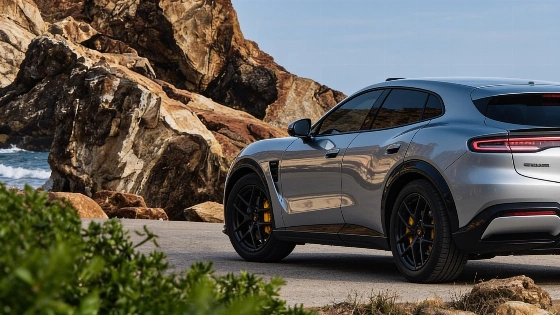
Luxeed is going straight for China’s high-end electric SUV market with the RX. This five-meter coupe-SUV brings together sharp tech, a striking design, and a pricing plan meant to break up the old order. The official launch is set for September 28 at 14:30 Beijing time. That’s when Luxeed will show the final versions and prices for China. Multiple industry sources and official Huawei and HIMA announcements confirm the date. The RX launch is a key move as Huawei pushes deeper into smart mobility.
The RX isn’t just another model for Luxeed. It changes what the brand stands for. It sits above the S7 sedan, R7 SUV coupe, and V9 minivan. It’s bigger and built for more performance than any of its siblings. At 5,020 mm long, it’s 6 cm longer than the R7 and a full 23 cm longer than the Tesla Model Y. Luxeed is making it clear: the RX is here to dominate on size and presence. Chinese auto media point to its 3,000 mm wheelbase and coupe-SUV shape as proof of its premium spot among local electric SUVs.
On September 16, Luxeed RX received regulatory approval for public road testing of its Level 3 autonomous driving system, marking a significant step toward advanced driver assistance in China.
Underneath, the RX uses Huawei’s Tuling platform and Giant Whale battery system. Buyers get two battery choices: a 100 kWh pack or a new 81 kWh version. The 81 kWh battery, announced just before the launch date, cuts the starting price by 10% to 269,800 yuan. That makes the RX more affordable but keeps the main features. The price drop is tied directly to the smaller battery, as several independent reports confirmed after the new setup was revealed on September 20. Both battery sizes come with two trims. The base model has interior LiDAR. The higher trim is ready for Level 3 autonomous driving, with prices for the L3-ready version starting at 329,800 yuan.
Performance is a big selling point. Rear-wheel-drive RXs put out 277 kW (377 hp). All-wheel-drive versions add a 160 kW (218 hp) front motor, for a total of 437 kW (594 hp). The latest Huawei electric motors spin up to 21,000 rpm. This lets them stay compact and keep power high at speed. The 100 kWh battery is rated for up to 852 km on the CLTC cycle, though real-world range is likely closer to 700 km WLTP. The 81 kWh version is estimated at about 560 km, based on internal calculations, not official numbers. The RX’s sensor setup is one of the most advanced in its class, with 38 sensors and several LiDAR units. Chinese industry outlets call it one of the most "sensor-rich" electric SUVs on the market.
Market response has been particularly strong for the L3-ready configuration, with Chinese media reporting that the majority of pre-orders are for this advanced version, underscoring the growing importance of autonomous features in the premium EV segment.
The RX stands out for its tech. It packs 38 sensors, including an 896-channel LiDAR with dual optical paths and three more solid-state LiDAR units. That’s a high count even for China’s top EVs. Higher trims add backup systems for power, computing, brakes, and steering, setting the stage for Level 3 autonomy. But Luxeed is clear: Level 3 features won’t be active at launch. They’ll depend on future software updates and Chinese regulatory approval. Getting certified in Europe is even tougher, with UNECE R157 rules making rollout harder. Reports from Sina Finance and Yiche say the RX’s L3 road test approval shows both marketing ambition and real regulatory progress. The RX is now at the front of China’s push for autonomous driving.
Design and driving feel are in the hands of European experts. Werner Gruber, who worked on the Ferrari LaFerrari and FXX-K, leads the RX’s design. Tobias Moers, former Aston Martin CEO and ex-head of Mercedes-AMG, handled chassis tuning. Inside, the RX has a 26-inch head-up display, a 16.1-inch center screen, and sports seats with 98 pressure sensors for adaptive support. The panoramic roof, split into zones, covers 1.8 square meters and has an electric curtain.
Pricing is a big part of Luxeed’s plan. The new 81 kWh RX puts it closer to the Xiaomi YU7, a direct rival in China’s electric SUV space. The YU7 starts at 233,500 yuan and goes up to 389,900 yuan for the 1,003 hp GT. With the RX now starting at 269,800 yuan, Luxeed is aiming for the same high-volume market where Xiaomi leads. Zhao Changjiang, Luxeed’s executive vice president, says 70% of RX pre-orders are from buyers looking for a second family car. For them, the smaller battery is enough for daily use and weekend trips, as long as they keep an eye on consumption.
The RX is launching in China, but Luxeed’s European plans are moving forward. Chery, which already sells Omoda and Jaecoo in Spain and works with Ebro, has named Luxeed as one of the brands set to enter Spain in 2027. In April 2026, Luxeed brought together over 300 dealers from Europe, the Middle East, and right-hand-drive markets to preview its future lineup. That lineup will include SUVs, coupe-SUVs, a flagship large SUV, a minivan, and even a two-seat sports car. But the company hasn’t said which models or names will come to Europe, or how Huawei’s HarmonyOS and autonomous tech will fit EU rules.
For now, the RX is only for China. Final prices and full specs will be revealed at launch. With its size, tech, and European engineering, the RX is a real contender at home—and could shake up markets abroad if it clears regulatory and technical barriers. As reported earlier, Chinese electric SUVs are already changing what buyers expect on price and performance. Luxeed’s latest move only heats up the fight. The RX’s arrival shows the battle for China’s electric SUV crown is wide open—and what happens next in Europe is still up in the air.