Madrid’s Colegio de Arquitectos will hold new elections after a year of disputed leadership. Two competing boards have claimed control since the contested 2025 vote. The move is meant to restore order and end the ongoing stalemate.
Madrid’s Colegio de Arquitectos (COAM) will hold new elections after more than a year of legal disputes and competing claims to leadership. The decision, announced Tuesday, comes as two rival boards continue to fight for control of Spain’s largest regional architects’ association.
The crisis began with the May 2025 elections, when Sigfrido Herráez was re-elected for a third term as dean. He won 54% of the vote, but his eligibility was immediately challenged: COAM’s rules limit deans to two consecutive terms, and Herráez’s candidacy was disputed from the start. The Electoral Board refused to recognize his win, but a court injunction allowed him to run and, for over a year, to act as dean.
"COAM publicly announced the start of new election procedures on September 1–2, 2026, aiming to resolve an institutional crisis that has persisted for over a year since the disputed May 2025 vote."
— El País
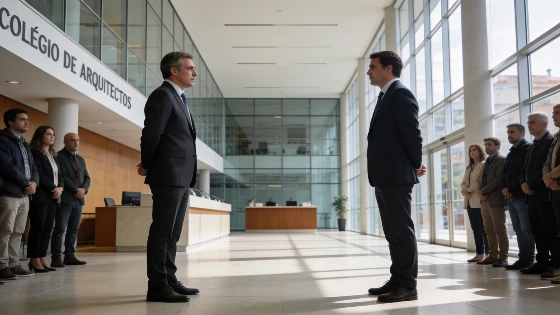
In June, a judge ruled that Herráez should have used internal appeals before going to court. This restored authority to the Electoral Board, which then declared Jesús San Vicente the legitimate winner. San Vicente and his team were proclaimed the new board in COAM’s exhibition hall, after security—acting on orders from the incumbent board—barred them from the main offices. Herráez’s group dismissed the ceremony as invalid, deepening the split.
Herráez now says he will start the process for new elections, arguing that only a fresh vote can "protect COAM from any attempt to alter its governing bodies without the required legal and institutional guarantees." He says the institution’s interests should come before personal ambitions, and that members should decide the future. San Vicente’s camp, however, calls the move a violation of COAM’s electoral rules, noting that every court and internal ruling so far has gone against Herráez’s efforts to stay in power or block the rival board. According to ABC, San Vicente’s supporters argue that Herráez no longer has the authority to call new elections after the previous board was removed, and they consider the move both illegal and against the statutes.
For over a year, COAM has operated with two parallel boards—one led by Herráez, the other by San Vicente—each claiming legitimacy. The deadlock has left the institution unable to function normally, with neither side able to fully take control or make decisions. The situation has become so entrenched that, as reported earlier, similar crises have affected other Spanish organizations, but few have reached this level of legal and operational paralysis. The split was cemented in July 2026, when the Electoral Board declared San Vicente the winner and he was proclaimed dean in the exhibition hall after security blocked access to the main office, as detailed by El País.
"The decision to call new elections has received unified support from most groups within COAM’s Junta de Representantes and several former deans, according to ABC. However, the exact date for the new vote has not been publicly set, with COAM leadership stating only that it will occur 'as soon as possible' and in full compliance with statutes and applicable regulations."
— ABC
Herráez, who previously said he would not seek another term if new elections were called, is now barred from running by COAM’s statutes. The original dispute—whether his partial first term counted toward the two-term limit—remains unresolved by the courts, leaving the possibility of further legal challenges even as the new vote is prepared. Both sides accuse each other of undermining democratic norms, and members have been left without clear leadership.
The crisis has real consequences for Madrid’s architectural sector. COAM oversees professional standards, licensing, and advocacy for thousands of architects in the region. The ongoing uncertainty has delayed decisions, complicated project approvals, and damaged confidence in the institution’s ability to represent its members. The new elections could restore order, but only if both factions accept the result and the courts do not intervene again.
This episode shows how fragile institutional checks can be when personal ambitions collide with unclear rules and slow-moving courts. Herráez’s use of legal loopholes and San Vicente’s focus on procedure have left COAM’s members caught in the middle. The return to the ballot box is less a victory than an admission that the system could not resolve its own contradictions. Unless the next vote is decisive and both sides respect the outcome, Madrid’s architects may remain stuck without clear leadership.