Madrid’s conservative majority has blocked opposition questions about a controversial penthouse purchase by Planifica Madrid. Over six million euros in public funds are at stake, but the government refuses to clarify the operation’s details.
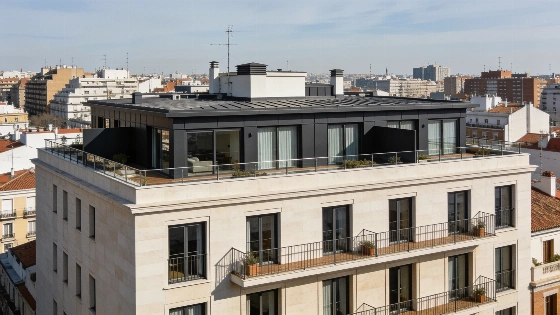
The Madrid regional government has used its majority in the Assembly to block more than ten opposition questions about the purchase of a luxury penthouse by the public company Planifica Madrid. This move shuts down any direct debate over why more than six million euros in public money were spent on a property whose purpose and selection remain unclear. Official records and Spanish media reports show that Planifica Madrid bought the Chamberí penthouse for 6.3 million euros, later listing it for resale at 6.69 million euros. The lack of explanation for the purchase has fueled controversy over the use of public funds.
Instead of answering questions in the next plenary session, Ayuso’s team cited procedural reasons to reject inquiries from PSOE and Vox. Their justification: the questions were too vague, not focused on government activity, or needed to be reformulated. But the rejected questions were the ones that addressed the details of the penthouse deal—when the government learned of the need for a temporary office, what Ayuso knew before the purchase, and why a property unsuitable for its stated use was chosen. The government’s explanation has shifted over time. The current official line, supported by PP leader Alberto Núñez Feijóo, is that the penthouse was meant to serve as a temporary office during renovations at Real Casa de Correos. However, zoning documents reportedly classify the property as residential, not administrative.
At the time of the penthouse purchase, Planifica Madrid already had 478 m² of vacant office space, raising questions about the necessity of acquiring this particular property.
Opposition leaders have openly criticized the government’s approach. Mar Espinar of PSOE accused officials of hiding behind technicalities to avoid transparency, noting that even straightforward questions about the Chamberí penthouse were dismissed as too vague. Manuela Bergerot from Más Madrid called the purchase a luxury operation funded by taxpayers and demanded Ayuso release all related documents. The opposition sees a pattern of stonewalling, with Assembly leadership under Enrique Ossorio (PP) acting as a shield for the president. According to reports from EL PAÍS and other major outlets, Ayuso has publicly denied any personal connection to the penthouse, saying she never lived there and that the purchase was not for her private use.
The Assembly’s spokesperson says some questions about Planifica Madrid have been accepted, but most focus on the company’s general transparency, not the penthouse itself. The main issue—how and why this specific property was bought—remains off-limits. Vox’s blocked questions focused on the timeline, Ayuso’s prior knowledge, and the financial fallout now that the government is considering selling the property in response to criticism. The controversy has also reached the Tribunal de Cuentas (Court of Auditors), which has admitted a complaint about possible damage to public funds, moving the dispute into a legal and financial arena.
Multiple media outlets report that after purchasing the penthouse for 6.3 million euros, authorities attempted to resell it for approximately 6.69 million euros, aiming for a markup of around 390,000 euros. This resale process included a scheduled telematic bid opening on September 16.
Public pressure has grown since the story broke in EL PAÍS, with critics arguing that the government’s refusal to answer basic questions undermines public trust. The situation is similar to other recent cases where ruling parties have used procedural tactics to limit oversight, as seen in a previous investigation into blocked parliamentary inquiries elsewhere in Spain.
The dispute centers on the use of public funds for a high-end property, the lack of a clear official residence for Madrid’s leadership, and the government’s unwillingness to provide a transparent account of its decisions. The opposition is expected to keep raising the issue in future sessions, even if only indirectly. For now, the PP’s control of the Assembly keeps questions about the penthouse off the table, reinforcing the sense that accountability is optional for those in power. This episode highlights how parliamentary procedure can be used to shield political leadership from scrutiny, and shows that in Madrid, transparency still depends on the will of the majority rather than public demand.