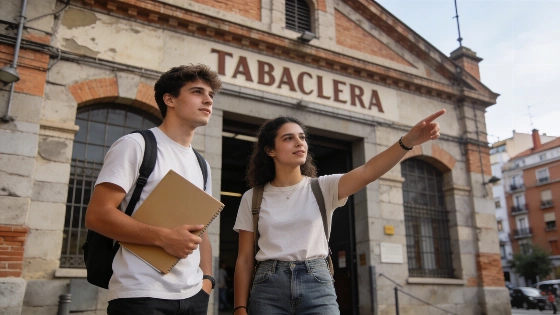
The Ministry of Culture has bypassed Madrid’s push for affordable housing at the Tabacalera, instead granting 800 square meters to a neighborhood platform tied to the Sol protest camp. The move reignites debate over public property and housing priorities in the Spanish capital.
Madrid’s affordable housing push just hit a wall. The Ministry of Culture has handed 800 square meters of the Tabacalera complex to a neighborhood group that includes the Sindicato de Inquilinas—the same activists behind the ongoing Puerta del Sol protest camp.
Culture minister Ernest Urtasun made the call. He ignored a formal request from Mayor José Luis Martínez-Almeida and the city council to turn the Tabacalera into affordable housing and public services. Instead, the ministry gave two annex buildings—Nave Trapecio and Nave Trastocados/Metrópolis—to 'Remontada Tabacalera'. This coalition includes the Centro Social Autogestionado La Tabacalera, 8M Lavapiés, Red Interlavapiés, Oficina de Urbanismo Social, and the Sindicato de Inquilinas. Independent outlets Vozpópuli and OKDIARIO report the 800 square meters are split into two spaces: 512 m² and 288 m². The ministry will pay for all renovations.
A separate contract for Tabacalera's project documentation was signed on September 17 for €682,500, funded by European sources.
Renovation costs will be covered by the ministry. Work is set to finish by year’s end. Once ready, the collective will run the space on its own. The plan is for cultural and community use—not housing. This goes against the city’s proposal, which called for affordable apartments, sports facilities, a nursery, a library, or social centers. That plan passed the Centro district council with Partido Popular support and Vox abstentions, but Más Madrid and the Socialist group blocked it. OKDIARIO points out that CSA La Tabacalera is the official recipient, with Sindicato de Inquilinas part of the Remontada Tabacalera alliance, not the sole beneficiary.
The Sindicato de Inquilinas has kept the Sol protest camp going, even after the regional government called it “illegal.” The group refuses public subsidies to stay independent. It runs on member dues—1,858 affiliates as of late 2025—plus donations and event partnerships. Ten percent of its income goes to a “resistance fund” for fines and legal costs. The rest pays for lawsuits and advocacy. Vozpópuli notes the group’s public stance: no government money, full independence.
The Tabacalera at Embajadores 53 is a Madrid landmark. Built between 1780 and 1792, it was a tobacco factory until 2000. Since 2003, the Ministry of Culture has owned it. In 2010, a shared-use model began between CSA La Tabacalera and Tabacalera Promoción del Arte. Structural problems and pandemic closures forced the ministry to rethink the building’s future. That led to this latest handover.
The transfer of part of Tabacalera's space is taking place amid a broader architectural renovation, as the building is being repurposed into a center for artistic production and residencies. This means the allocation to Remontada Tabacalera is not from an unused property, but is part of a larger redevelopment plan.
City officials are frustrated. The ministry’s move blocks a clear plan for affordable housing and instead boosts activist groups already leading Madrid’s housing protests. The Sol camp remains. Over 1,000 protesters are still there, as reported earlier.
This fight shows the deep split between Madrid’s national and city governments. The city wanted to tackle the housing shortage. The ministry chose to back grassroots groups with a record of direct action. The message is clear. Activist networks are gaining ground in Madrid’s public spaces. Institutional housing solutions are stuck. Political gridlock and clashing visions keep the crisis unresolved.