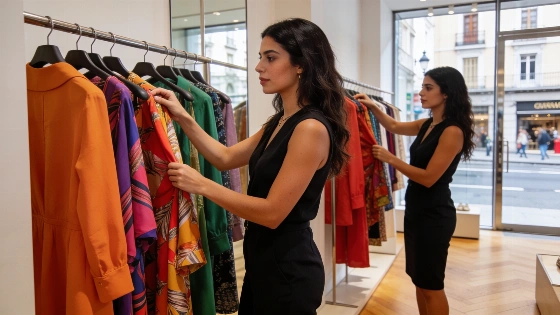
Madrid is fast becoming the European base for Latin American fashion. Colombian designers and brands are opening flagship stores and joining major events. The city’s luxury districts now serve as a gateway for Latin American design.
Colombian and Latin American fashion brands are moving beyond brief appearances on European runways. Madrid’s luxury shopping streets are now the focus, with new flagship stores and major debuts signaling a lasting presence in the Spanish capital.
The upcoming Mercedes-Benz Fashion Week Madrid will be a key stage for Latin American designers. However, Spanish media report that the 2026 edition will open with a show by Pedro del Hierro on September 14 at the Invernadero del Palacio de Cristal de la Arganzuela, not Agua by Agua Bendita. This detail reflects the ongoing competition for visibility among international brands in Madrid’s fashion scene.
The 2026 edition of MBFW Madrid will take place from September 14 to 19 across multiple city venues, including Palacio de Cibeles and Nebrija University, reflecting a new urban format for the event.
Agua by Agua Bendita started as a small Medellín swimwear label in 2003 and now sells in over 50 countries, with a strong base in Colombia. Their Madrid debut follows last year’s headline appearance by Silvia Tcherassi, another Colombian designer who marked ten years of her boutique in the Salamanca district by launching her collection at the Palacio de Cibeles.
The bigger shift is happening in retail. This October, Colombian multi-brand retailer Malva plans to open its first European store at 12 Calle Serrano, in the heart of Madrid’s luxury district. Some reports mention a 1,200-square-metre space and a selection of about 120 Latin American brands, including Colombian names like Pepa Pombo and designers from Argentina, Peru, and Mexico, but these details have not been confirmed by official press releases or major business outlets. Malva’s founders call the store a "permanent embassy" for Latin American talent, aiming to connect designers with Spanish shoppers and share the stories behind the labels. Prices will range from €60 to €2,000, putting these brands alongside established international luxury houses.
Madrid’s role as a gateway is backed by numbers. According to the Registro Único Empresarial y Social, Colombia’s fashion sector includes over 54,000 companies, with 96% of exports coming from small and medium-sized businesses. Until now, most exports went to the US and Latin America. The new Serrano store will give these brands direct access to Spanish consumers, offering a curated selection that was rarely seen in Europe before.
The official MBFW Madrid 2026 program includes a dedicated focus on emerging designers, with regional media confirming the participation of a young designer from Vigo in the EGO segment on September 19. This highlights the event's commitment to supporting new talent alongside established names.
Other major brands are following. Johanna Ortiz, with about 200 multi-brand points of sale, used her March 2026 appearance at Mercedes-Benz Fashion Week Madrid to speed up her European expansion. The company’s sales rose from $17 million in 2024 to an estimated $30 million in 2025. Colombian leather goods company Vélez, which ended 2025 with 300 stores across Latin America, is considering Madrid for its first European location in 2027.
Madrid’s rise as a fashion hub is no accident. Alicia Damiano, founder of Agencia The Comunicación, points to the city’s cultural, historical, and linguistic ties with Latin America as a natural advantage. She says the growing presence of Latin American designers at Madrid’s fashion events brings diversity, attracts investment, and draws new talent, strengthening the city’s international profile.
The shift from runway to street is also changing how events are held. The Madrid es Moda project, run by ACME, will again use public spaces from September 7 to 10, moving designer presentations out of traditional venues and into places like the Jardines de Sabatini and the Museo de Historia. Organizers say the goal is to revitalize Spanish designer fashion and bring it closer to the public, matching the wider push for visibility and commercial impact.
Madrid’s growing status as a fashion capital comes as other cultural sectors face uncertainty. As reported earlier, institutions like the Acadèmia Valenciana de la Llengua are dealing with budget cuts and political pressure, showing the different fortunes of Spain’s creative industries.
Madrid’s emergence as a European base for Latin American fashion is a deliberate move by brands seeking direct access to the continent’s shoppers and capital. The city’s luxury districts, once dominated by established European names, are now seeing a new wave of Latin American designers with commercial ambition and cultural depth. This shift is about more than style—it’s about market share, influence, and changing Madrid’s place in the global fashion economy. The city’s openness to these newcomers, while other sectors pull back, points to a practical approach that could shape Spain’s economic and cultural direction in the years ahead.