The Madrid regional government is under pressure after its purchase of a luxury penthouse in Chamberí came to light, raising questions about transparency and decision-making at the highest levels. The controversy intensified when images of the property, listed for sale on Idealista and Gilmar, showed personal belongings linked to regional president Isabel Díaz Ayuso and her partner, Alberto González Amador. The photos included dresses and shoes identified as Ayuso’s, along with a towel embroidered with her name. They circulated among members of the Partido Popular (PP), prompting confusion and criticism within the party.
Party insiders expressed disbelief at González Amador’s lack of caution. He is under investigation over an alleged €300,000 tax fraud and a impressive increase in his assets. Some in the PP viewed the identifiable personal items in the property listings as a serious oversight, given the prominence of those involved. They questioned whether the exposure was accidental or intentional.
Planifica Madrid, a public company attached to the regional presidency, acquired the penthouse in April 2026. Located on Paseo del General Martínez Campos, the property measures roughly 481-485 square metres. The transaction became public in late July. Initial descriptions presented the property as a temporary workplace for the regional president during renovation work at the Real Casa de Correos, the seat of the presidency. Later official documentation described it more broadly as an institutional property, with a work area and rest space, as well as accommodation for officials or visiting authorities on official business.
The proposed office use drew scrutiny because the building’s permitted use was reported to be residential. The regional government maintained that the purchase was lawful and that the price matched an independently assessed market value. It described the property as an institutional support space for government departments and said it was “in no way” acquired as an official residence for Ayuso. The shift from a temporary workplace rationale to a broader description of mixed institutional use prompted further questions about the transaction’s purpose.
Planifica Madrid paid approximately €6.3 million for the penthouse. After the controversy, the company put it up for sale at €6,694,201, excluding taxes, above the reported acquisition cost. The first sale process attracted no offers. A second tender also ended without a buyer on 21 October 2026. The property is now being offered through an open-ended public process at the same asking price and on the same terms, until it is sold or Planifica Madrid withdraws it. The failed tenders have left the regional government owning a high-value residential property, with no buyer and no established government office there.
The controversy has also prompted scrutiny beyond the regional executive. Más Madrid brought the transaction before the Tribunal de Cuentas, examining the public expenditure and the acquisition’s stated purpose, which the government later abandoned in favor of a sale. The regional government sought dismissal of the proceedings and defended the purchase as lawful, citing the assessed market value and the property’s intended institutional role.
The incident came just days after another communication misstep by the regional government, disrupting the disciplined crisis management usually associated with Ayuso and her chief adviser, Miguel Ángel Rodríguez. When questioned, Ayuso’s team played down the issue, citing its focus on recent wildfires in Madrid. Alfonso Serrano, the PP’s secretary general in Madrid, remained silent, an unusual response during a political controversy.
The arrival of 50,000 migrants in Ceuta shifted national attention, but the penthouse controversy continued to reverberate within the PP. The purchase of a high-value property in Ayuso’s own neighbourhood faced scrutiny, particularly as questions persisted about González Amador’s finances. The episode also tested Rodríguez’s reputation for forceful political communications and crisis management.
Conservative newspaper ABC called for a clear explanation from Ayuso, drawing attention to the unusual silence of supporters who are typically vocal. The failed resale and continued public marketing have prolonged questions about the penthouse’s valuation and intended use, as well as the decision to acquire it through a public company.
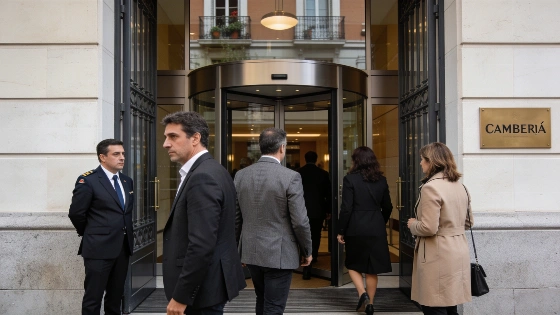
The Chamberí case has renewed attention to transparency in public property decisions, especially when public funds and senior political figures are involved. The purchase price and the changing description of the penthouse’s purpose, along with oversight proceedings and unsuccessful sale attempts, have made the transaction a test of Ayuso’s leadership and the PP’s internal cohesion.