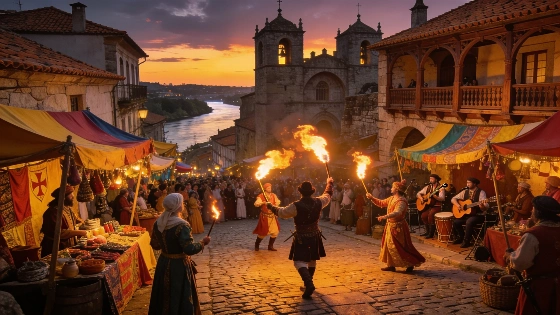
Madrid's summer agenda picks up as the city reaches mid-July, with free events filling out its cultural calendar. The Puente de Vallecas district is preparing for the Fiestas del Carmen, a week-long celebration featuring open-air concerts, parades, children's activities and fireworks. The highlight is the Batalla Naval, a water-fight tradition that draws crowds and offers relief from the heat. Running from July 12 to 19, the festivities take place at locations across Vallecas, with the basic fairground on Calle Payaso Fofó and easy access via Portazgo Metro station.
The Fiestas del Carmen program spans a range of activities. The Trofeo del Carmen cycling race opens the celebrations, followed by a rumba concert from Javi Cantero on July 14. The official inauguration, with a speech by local comedian Álvaro Casares, takes place on Wednesday. Thursday brings parades, DJs, a performance by Ramoncín and the procession of the Virgen del Carmen. Friday's schedule includes a foam party, children's shows, Jaime Urrutia and a Tina Turner tribute. Saturday features Castellers, more parades, Santiago Auserón and Orquesta Bravalia. On the final day, Sunday, the program includes the Batalla Naval, a Leño tribute, Banda del Capitán Inhumano and a fireworks display.
For a quieter escape from the summer sun, several cultural venues are offering free exhibitions. At the Conde Duque Cultural Center, an exhibition as part of Veranos de la Villa invites visitors to revisit childhood memories through hundreds of objects from the EGB era. Open until August 30, the display recreates everyday scenes with school materials, TV programs and iconic products. It is open Tuesday to Sunday, with free entry until capacity is reached.
Meanwhile, Casa de América marks the 250th anniversary of the United States with a commemorative concert on July 10. The Sonor Ensemble, joined by guest flautist Katrina Penman and directed by Luis Aguirre, will perform works by George Gershwin, Aaron Copland, Yvonne Freckmann, Katrina Penman and Flores Chaviano. The program pairs 20th-century classics with contemporary premieres, including Gershwin's Rhapsody in Blue and a new composition by Penman. The event takes place at the Gabriela Mistral Amphitheater, accessible via Banco de España Metro and several bus lines.
Football fans can visit México 86. El mundo unido por un balón at Fundación Casa de México, where the exhibition runs until September 13. It features photographs by Annie Leibovitz, commissioned to capture the intersection of football and Mexican heritage during the 1986 World Cup. Taken at sites such as Chichén Itzá and Teotihuacán, Leibovitz's images use models to bring the sport's energy together with the grandeur of Mesoamerican civilizations. The venue is on Calle de Alberto Aguilera, near San Bernardo Metro.
In the heart of El Retiro Park, Casa de Vacas hosts Home Sweet Home by Ecuadorian artist Bryan Bucheli until July 26. The exhibition's 22 paintings explore domestic spaces through the artist's personal experience as a domestic worker, offering a critical view of identity and representation. The gallery is easy to reach from Retiro Metro station and several bus routes.
Those who prefer outdoor activities can head to the Parque Forestal de Valdebebas - Felipe VI in northeast Madrid, a vast green space for walking, cycling and relaxation. The city's second-largest park features 32 km of trails, a 5 km bike lane and landmarks including the Fuente de los Sapos, the Felipe VI viewpoint and a skating circuit. The park is accessible via Valdebebas Renfe station and local buses.
The events are part of a wider municipal cultural network that brings programming to district cultural centers and public spaces. Madrid City Council agendas list concerts, theatre, cinema, exhibitions and family activities. Some events require advance registration, while others offer free entry without registration. In the city's Villa de Vallecas district, for example, programs have been promoted at venues including the Centro Cultural Benjamín Palencia, Teatro Municipal de Vallecas, Centro Cultural Zazuar and Paseo Federico García Lorca. Together, neighborhood venues and open-air locations make cultural programming accessible beyond the city center.
Madrid's summer culture stands out for its range and accessibility. Traditional festivities, contemporary art and outdoor recreation reflect a broader trend in Spanish cities to activate public spaces during the hottest months. This approach supports local communities and draws visitors seeking authentic experiences. Free events matter in particular as many residents look for affordable ways to spend their leisure time. In a related development, an article recently examined how major sporting events affect cultural programming, including how TV shows like 'Pasapalabra' adapt their formats during the World Cup period. Read the analysis at how entertainment schedules shift during global tournaments. As Madrid expands its summer offerings, the balance between tradition and innovation remains central to the city's cultural identity.