Madrid’s government is launching 40 new public-private care homes on free municipal land. Operators can profit from external users and private services. The plan faces criticism for expanding private business on public assets.
The Community of Madrid is moving ahead with a plan to build 40 new public-private care homes on municipal land, allowing private operators to generate additional revenue by offering services to people not residing in the centers. According to public documents reviewed by EL PAÍS, these operators will be able to set different prices for internal and external users, expanding their business opportunities beyond the core residential and day care services.
The regional government, led by Isabel Díaz Ayuso, is offering companies free use of valuable municipal plots for up to 75 years. In exchange, firms are expected to invest around €15 million in construction and equipment for each center. The model guarantees annual income of up to €2 million from publicly funded places, while also permitting operators to sell private places at market rates and provide unspecified “other services” to the wider community. These could include amenities like cafeterias, parking, hairdressing, or podiatry, with the flexibility to set separate tariffs for residents and outsiders.
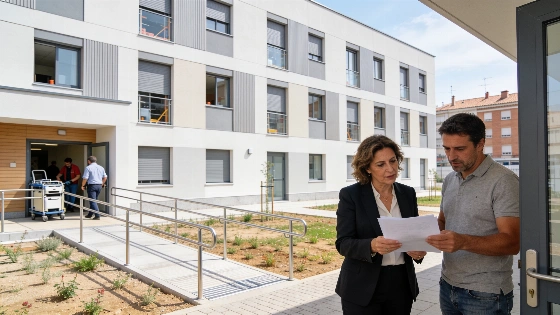
One example is the new facility planned for Vicálvaro, where the tender documents specify that operators may charge for additional services both to residents and to people from the surrounding area. The only restriction is that these services must remain secondary and not interfere with the primary care function of the center. The municipal plot for this project is valued at €1.5 million, and the operator will have the right to set different prices for residents and external clients.
The regional initiative began in February with the transfer of an 8,000-square-meter plot in San Blas-Canillejas, valued at over €2 million, to launch the first center under this model. The approach is now being extended to Vicálvaro and is set to expand across the region, with at least 17 more sites in Madrid city and additional locations in Leganés, Móstoles, San Sebastián de los Reyes, Alcobendas, Rivas Vaciamadrid, and Torrejón de Ardoz. All these projects are part of the “Plan de Residencias y Centros de Día 40-40,” which will feature telemedicine equipment and rooms with oxygen supply. Forty percent of places will be reserved for the public network, while the remaining 60% will be accessible via the so-called “cheque servicio” from the national dependency care system.
Data obtained by EL PAÍS under transparency laws show that the 19 plots in Madrid city alone are worth €87.8 million, though this figure reflects only their book value, not their higher market price. The scale of the operation has drawn criticism, with the PSOE passing a resolution against the program at its February congress, arguing that it represents a major privatization of elderly care services. Some local socialist groups, such as in Leganés, had previously supported joining the scheme, viewing it as a response to demographic aging, but the party’s official stance now favors publicly managed facilities.
Since 2019, the regional government has already transferred or plans to transfer 100 public plots for long-term private operation, including not only care homes but also subsidized private schools and thousands of affordable rental apartments. The concession periods range from 40 to 75 years, after which the buildings revert to public ownership. During this time, private operators can profit from public funding, private places, rental income, and ancillary services.
This approach to public-private collaboration in Madrid’s social infrastructure has parallels with other recent government strategies, such as the centralized management of the Ceuta migrant crisis, which was detailed in a recent report on national crisis response coordination. Both cases highlight the ongoing debate over the balance between public oversight and private involvement in essential services.
In the context of Spain’s aging population, the expansion of care home capacity is seen as urgent. However, the use of public land for private profit remains contentious, with critics warning of long-term impacts on the public sector’s ability to provide affordable, high-quality care. The outcome of Madrid’s 40-40 plan may set a precedent for similar initiatives in other regions, as authorities seek solutions to demographic and social care challenges.