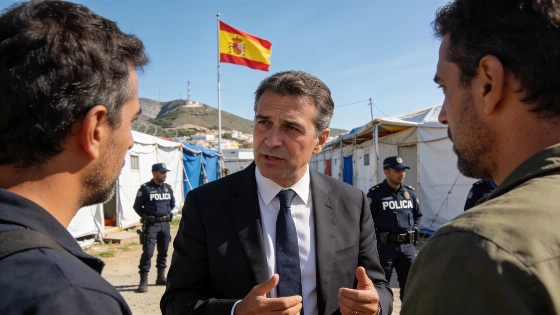
Spain’s government has created a single command for Ceuta’s migration crisis. Ángel Víctor Torres will lead, with new funds and national security support. The move follows weeks of criticism and mounting local pressure.
Spain’s government has reversed its approach to the ongoing migration crisis in Ceuta, announcing the creation of a single command structure nearly a month after the largest border crossing in the city’s history. The new leadership, headed by Ángel Víctor Torres, marks a significant political shift after weeks of resistance to calls for centralized management. The decision comes as the National Security Council prepares to declare Ceuta a “situation of interest for national security,” underlining the gravity of the situation and the need for coordinated action.
Ángel Víctor Torres, Minister of Territorial Policy and a key figure in previous crisis responses, will now oversee operations in Ceuta. This move answers repeated requests from Ceuta’s president, Juan Jesús Vivas, who has described the local administration as overwhelmed since the crisis began. The new command will be supported by a specialized committee, including Vivas, the government delegate in Ceuta, and representatives from the CNI, with backing from the national security department at La Moncloa. The government’s decision signals an implicit acknowledgment of the crisis’s severity, which had previously been downplayed in official statements.
The agreement was reached after political negotiations between Vivas and First Vice President Carlos Cuerpo, who also discussed a substantial financial package to support Ceuta’s stalled economy. While several ministers previously argued that a single command was unnecessary, the government ultimately conceded to mounting pressure from both local authorities and the opposition. The timing of the announcement, coinciding with the return of the full cabinet and President Pedro Sánchez to Madrid, highlights the administration’s response to criticism over its handling of the crisis.
Cuerpo explained that the shift was prompted by the crisis entering a new phase, where coordination between administrations has become increasingly important. Initially, the government preferred a joint management approach, maintaining separate competencies. However, persistent criticism and the visible strain on local resources led to a change in strategy. The move is widely seen as a tacit admission of earlier missteps and a response to the growing demands for more decisive action.
Despite the new structure, thousands of migrants remain on Ceuta’s streets, with authorities still unable to provide an exact count. According to Cuerpo, around 2,900 minors are now under control, but many adults continue to move freely, lacking identification or formal processing. The initial strategy focused on encouraging voluntary returns to Morocco, which over 80,000 migrants have reportedly done, but managing those determined to stay has proven far more complex. Legal constraints prevent forced expulsions without individualized procedures, and migrants cannot be compelled to remain in designated locations.
During his visit to Ceuta, Cuerpo adopted a notably more serious tone than previous ministers, emphasizing the need for the state’s presence in the city and promising to accelerate both expulsions and the management of minors. This directly addressed Vivas’s accusations that the government had abandoned Ceuta. The new command is expected to streamline processes, but the challenge remains significant: only 1,800 places have been made available for the estimated 5,000 migrants who refuse to leave, with local resistance complicating efforts to expand capacity.
On the economic front, Cuerpo announced additional funding, though details remain pending. A €180 million recovery plan is already underway, but officials admit that current circumstances require further measures. Immediate steps are being prepared to support local businesses, self-employed workers, and public services, aiming to stabilize the city amid ongoing uncertainty. The government’s shift in tone and policy reflects the scale of the crisis and the urgent need for effective solutions.
For context, Ceuta’s situation has drawn national and European attention, with previous coverage highlighting the mounting pressure on authorities to expedite expulsions and provide more resources. The crisis has exposed gaps in Spain’s migration management and tested the resilience of local institutions. As seen in recent developments such as the removal of traditional restrictions in Tiedra’s Santa Águeda Brotherhood, Spanish society continues to adapt to changing realities, both in migration and broader social norms.
Ceuta’s unique position as a Spanish enclave on the African continent has long made it a focal point for migration flows. The current crisis underscores the challenges of balancing humanitarian obligations, legal requirements, and local capacity. The government’s new approach will be closely watched in the coming weeks as authorities attempt to regain control and restore stability in the city.