Spain’s government has established a single command to manage Ceuta’s migration crisis. Ángel Víctor Torres will lead the response. An economic recovery plan is also in preparation.
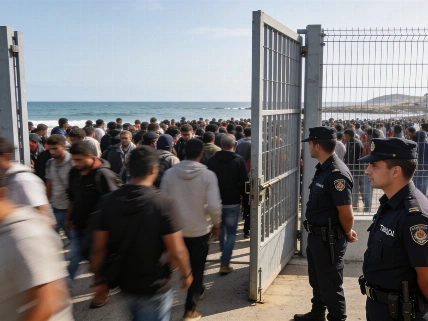
The Spanish government has moved to centralize management of the ongoing migration crisis in Ceuta, nearly a month after the city was overwhelmed by the arrival of around 80,000 migrants swimming across the border at the end of July. The Council of Ministers, meeting for the first time after the summer break, approved the creation of a single command structure led by Ángel Víctor Torres, Minister of Territorial Policy. This new body will coordinate efforts between the central government, the president of Ceuta Juan Jesús Vivas, the city’s government delegate, and representatives from the National Intelligence Centre.
The decision comes after weeks of mounting pressure from local authorities, who had repeatedly called for Madrid to assume direct control as the situation escalated beyond the city’s capacity. The move was preceded by a meeting of the National Security Council earlier in the day, a legal prerequisite for declaring the Ceuta crisis a matter of “national security interest.” Only after this declaration could the single command be formally established.
Government spokesperson and Minister of Migration Elma Saiz, along with Interior Minister Fernando Grande-Marlaska, joined Torres in presenting the new measures following the cabinet meeting. The opposition has criticized the government for acting only after nearly a month of uncertainty and disruption in Ceuta. Local businesses have suffered significant losses since the influx, and the city’s administration has struggled to maintain order and provide basic services.
Alongside the new command structure, the government is preparing an economic recovery plan aimed at revitalizing Ceuta’s battered economy. According to Economy Minister Carlos Cuerpo, the plan could mobilize up to 180 million euros in aid, though final approval was not reached at Tuesday’s meeting. The details are expected to be finalized in the coming weeks.
This shift in strategy follows earlier reports of growing political tension and criticism over the government’s handling of the crisis. As previously covered in RUSSPAIN’s analysis of the government’s evolving response, the creation of a single command marks a significant change in Madrid’s approach, reflecting both the scale of the emergency and the need for coordinated action.
Ceuta, a Spanish autonomous city on the North African coast, has long faced challenges related to migration due to its proximity to Morocco. The recent surge in arrivals has placed unprecedented strain on local infrastructure and social services. The government’s intervention is intended to restore stability, support local businesses, and ensure a unified response to future incidents. The coming weeks will be critical as authorities work to implement the new measures and finalize the economic support package.