About 10,000 teachers gathered outside Madrid’s education department on the strike’s second day. Organisers put participation at 62%; the department reported 32.2%, as staff seek lower teaching loads and higher pay.
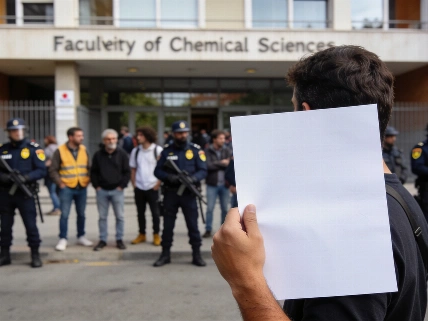
Across Madrid, the strike called 65,000 non-university teachers away from schools serving more than 666,000 pupils. On 15 October, the Delegation of the Government in Madrid estimated that around 10,000 teachers gathered outside the regional Education Department. The indefinite strike began on 14 October.
CCOO called for more resources and better working conditions. UGT joined the call, as did STEM. CGT, CNT and Solidaridad Obrera also backed the action, alongside education platforms.
Organisers said 62% of staff joined the strike. The department put participation at 32.2% in schools and secondary institutes, more than 12 percentage points below its figure for the first day. It said the day was proceeding normally. CSIF gave a separate estimate of 45%, or nearly 31,000 teachers. On 14 October, the strike committee put turnout at about 70%, while the regional government reported 44.6%. Education councillor Mercedes Zarzalejo described the mobilisation as having political and electoral objectives, El País reported.
The turnout gap mirrors an earlier Madrid teachers’ stoppage, covered in an earlier strike report.
Teachers and supporters formed a symbolic human chain outside the department’s headquarters. They called for more resources for public education and displayed slogans about class sizes, including “With these ratios, we can’t even fit in the playground.” Green shirts bearing the public-school movement’s slogan mingled with yellow shirts worn by participants in the early-childhood education strike.
The protest committee included CCOO. CGT and CNT also took part. Solidaridad Obrera, STEM and UGT were involved as well. On the first day, protesters blocked the Castellana. Pickets also gathered outside education centres.
The unions want to restore a ceiling of 17 weekly teaching periods in secondary schools and vocational training. Their proposed limit for primary schools is 22 periods. They also want tutor duties included in the calculation. Department-head responsibilities should count too, along with coordination work.
The committee seeks a class-size limit of 13 pupils in early-childhood education. Its proposed cap for primary is 15. For secondary, it is 20; for bachillerato, 23. Vocational training would have a limit of 15 pupils. The unions also seek adjusted ratios for pupils with special educational needs and support requirements.
The unions are seeking a €600 monthly increase in the regional general teacher supplement. They also want equal pay for teachers in FP and Servicios a la Comunidad. The same demand applies to staff in Pedagogía Terapéutica and Audición y Lenguaje.
CSIF staged a separate protest outside the Economy, Finance and Employment Department, led by Rocío Albert. The union put attendance at around 200 teachers and called for higher salaries. It also wants a capital-city supplement for Madrid’s teaching staff. CSIF announced three full strike days from 14 to 16 October, with plans for partial actions during the school year.
Miguel Ángel González, head of CSIF Education Madrid, said the department controls the regional budget. He urged it to use savings from strike-related salary deductions to repair schools. CSIF’s estimate assumes that 45% of the workforce is on strike, or nearly 31,000 teachers a day. Using an average deduction of €100 per teacher, the union calculates savings of more than €3 million daily and around €10 million over its three strike days.